Team USA had supposedly reached the perfect ending.
The gold medal had been won.
Confetti was falling.
Fans were celebrating Caitlin Clark.
But according to the supplied video transcript, the most dramatic moment allegedly happened after the cameras moved away from the court.
The video claims Clark entered a private executive area following the championship and informed basketball officials that she was finished playing for Team USA.
It further claims NBA commissioner Adam Silver was present and became emotional after hearing her decision.
Those are extraordinary allegations.
They also require an important distinction.
The supplied transcript does not provide direct footage, an official Clark statement, an identified public announcement, or independently verifiable documentation establishing that Clark actually resigned from Team USA.
Therefore, the alleged departure and private meeting should be understood as claims made by the supplied video rather than independently established events.
Within that narrative, however, the video constructs an enormous post-championship confrontation.
The story begins with celebration.
According to the source, thousands of spectators were chanting Clark’s name after the final.
Team USA had achieved the objective.
Gold.
The tournament was supposed to end with American basketball celebrating another international championship.
Instead, the narrator describes an entirely different atmosphere beneath the arena.
The video claims Silver stood near a doorway inside a VIP area looking visibly shaken.
Unnamed witnesses are said to have described him as pale and emotional.
The reason, according to the video, was Clark.
The source alleges she had decided the championship would be her final appearance for Team USA.
To explain such an extraordinary decision, the narrator rewinds the story.
The video portrays Clark’s relationship with the national program as strained long before the World Cup final.
It points back to her omission from an earlier Olympic roster.
The transcript acknowledges the publicly presented basketball considerations surrounding that decision but then offers a much more provocative interpretation.
It claims members of the basketball establishment did not want a rookie immediately becoming the central attraction.
No direct evidence establishing that motive is supplied in the transcript.
The narrator nevertheless uses that interpretation as the foundation for everything that supposedly followed.
The video claims fan and sponsor backlash created substantial commercial consequences.
It then alleges television networks and corporate sponsors pressured basketball officials to ensure Clark participated in the World Cup.
Again, those claims are not accompanied in the transcript by contracts or named executives confirming them.
The source then describes an uncomfortable training-camp environment.
According to the video, veteran players allegedly formed their own groups and rarely acknowledged Clark unless cameras were present.
The transcript goes further.
It claims passes were deliberately directed away from Clark during scrimmages.
It suggests the coaching staff publicly praised Clark while using offensive structures that minimized her influence.
Clark was supposedly placed away from the main action while veteran players controlled possessions.
The narrator interprets that as evidence of an internal hierarchy attempting to win without allowing Clark to become the central figure.
That is a significant allegation about motive.
The supplied transcript does not independently establish that intention.
Still, within the video’s narrative, Clark repeatedly overcame the alleged limitations once tournament games began.
The source portrays international crowds as overwhelmingly interested in seeing her.
It describes increased ticket demand and intense reactions whenever Clark touched the basketball.
The video also claims Clark produced spectacular shooting and passing performances during the tournament.
Her influence supposedly extended beyond basketball.
According to the narrator, broadcast audiences increased dramatically.
Merchandise demand surged.
Clark jerseys reportedly disappeared from inventory.
The source then makes one of its largest financial claims.
It describes Clark as the engine behind billions of dollars in future commercial value.
It also claims her image became central to international sponsorship presentations.
Those financial assertions are not supported in the supplied transcript by underlying contracts or financial documents.
They therefore remain part of the video’s narrative.
The narrator argues that executives believed winning the championship would resolve any tension.
Gold would supposedly make Clark feel connected to the national program.
Instead, the video claims the opposite occurred.
Clark allegedly felt treated as a commercial asset rather than a respected teammate.
The source introduces several supposed examples.
It claims teammates cropped Clark out of social-media celebrations.
It alleges veterans failed to acknowledge major Clark performances during media appearances.
It describes private conversations and social situations from which she was supposedly excluded.
None of those private incidents is directly demonstrated by evidence included in the transcript.
But they become essential to explaining the alleged postgame decision.
Then comes the championship game.
The source portrays it as extremely physical.
Clark supposedly received aggressive defensive treatment while Team USA struggled to protect her through screens and secondary actions.
With the Americans trailing late, the narrator claims Clark took control.
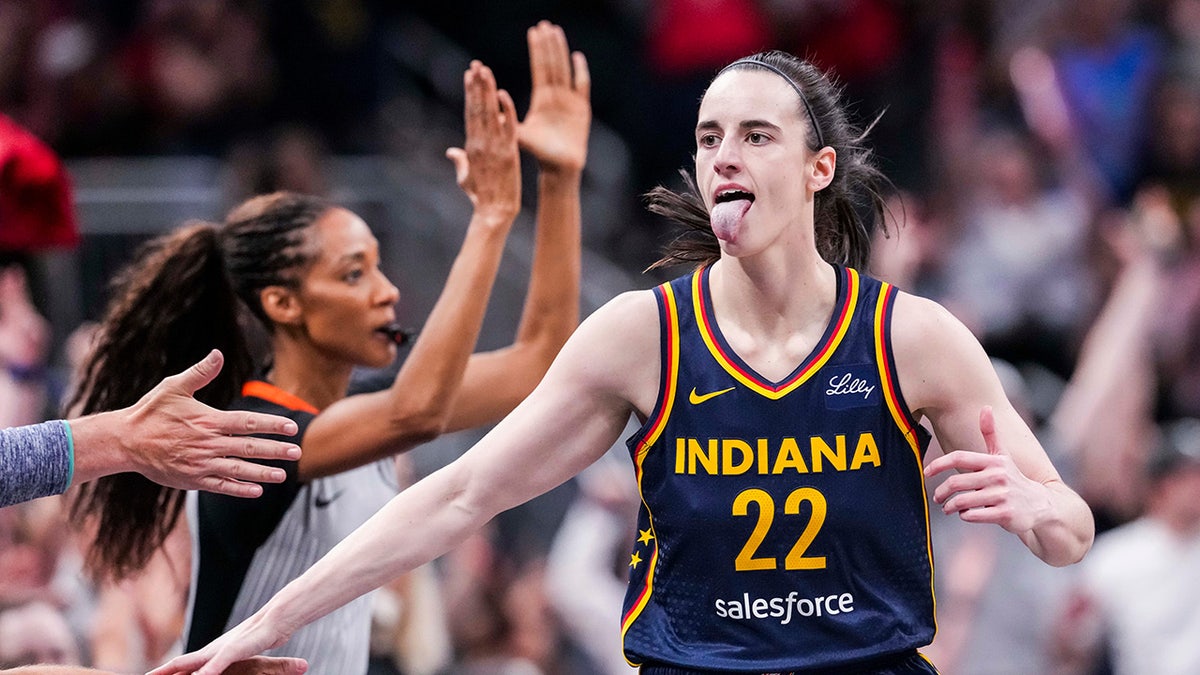 According to the video, she waved off a scripted action.
She hit a step-back three.
She created a steal.
That sequence reportedly helped Team USA erase the deficit.
Then came the biggest shot.
With seven seconds remaining, according to the transcript, Clark was double-teamed nearly 30 feet from the basket.
She launched.
The shot fell.
The narrator describes it as the championship-sealing dagger.
That moment should have created the perfect ending.
Instead, the source says the celebration exposed another alleged divide.
According to the transcript, some younger teammates immediately approached Clark while veteran leaders initially celebrated elsewhere.
The narrator interprets that physical separation as meaningful.
Body language alone cannot establish hostility.
But the video uses the scene to reinforce its broader narrative of internal tension.
Clark’s behavior during the medal ceremony is interpreted similarly.
The source describes her smile as controlled and her expression as emotionally distant.
Again, that is subjective interpretation rather than proof of her internal feelings.
Then the story reaches its central allegation.
According to the video, Clark left the main celebration, changed out of her uniform and requested an escort to an executive area.
Silver and senior basketball officials were supposedly inside.
The transcript claims Silver approached Clark expecting to congratulate her.
Clark allegedly did not reciprocate the celebratory mood.
Instead, according to the narrator, she thanked the executives for the opportunity and told them she would no longer play for Team USA.
The video claims Clark said she had fulfilled her obligations and delivered the championship.
More dramatically, the narrator alleges Clark accused the institution of tolerating internal sabotage and treating her as a commercial commodity.
These alleged private statements are not supported in the transcript by audio or an on-record Clark interview.
They should therefore not be treated as confirmed quotations.
The source then turns its attention to Silver.
According to the video, the commissioner urged Clark to reconsider.
The transcript claims he discussed future tournaments, international basketball and Clark’s influence on young fans.
Clark supposedly remained unmoved.
The video says she responded by emphasizing merit, respect and accountability.
Then comes the emotional centerpiece of the title.
The narrator claims witnesses saw tears forming in Silver’s eyes.
The video portrays him as suddenly understanding the commercial consequences of losing Clark from international basketball.
Again, the transcript provides no direct public footage or named witness testimony establishing that private reaction.
But within the source’s narrative, the moment represents a dramatic reversal of power.
Silver supposedly could not solve the problem financially.
The narrator argues that Clark possessed enough independent commercial power that she no longer needed the national program to define her career.
The video then imagines enormous consequences.
Broadcast networks would supposedly become concerned.
Future ticket sales could suffer.
Sponsors could reconsider their involvement.
The narrator presents Clark as commercially powerful enough to destabilize the international strategy surrounding women’s basketball.
According to the source, Clark then thanked the officials and left.
The transcript claims she bypassed the normal postgame media area and departed through another exit.
Rumors supposedly began spreading through the arena.
The video describes delayed media activity.
It claims officials entered the Team USA locker room.
It portrays coaches gathering amid growing uncertainty.
Then the narrative expands from basketball to economics.
The source alleges major sponsors immediately began contacting league headquarters.
It further claims broadcast executives demanded clarification.
Perhaps the strongest numerical assertion involves cultural engagement.
The narrator says Clark generated 80 percent of it.
No supporting measurement methodology is supplied in the transcript.
That figure should therefore remain attributed rather than presented as established data.
The source nevertheless uses those claims to argue that international basketball had become dangerously dependent on one athlete.
The traditional assumption, according to the narrator, was that players would always prioritize representing their country regardless of internal difficulties.
Clark supposedly challenged that structure.
Her individual brand was already powerful.
Her domestic games attracted crowds.
Her supporters followed her closely.
The narrator therefore argues she possessed leverage previous generations rarely had.
The video then describes what it claims happened during the days following the championship.
It portrays USA Basketball as unusually quiet.
It claims official social accounts produced subdued material rather than aggressive championship celebration.
The narrator interprets that supposed silence as evidence of concern.
Again, institutional communication patterns alone would not prove Clark had resigned.
The video also claims commentators began examining Clark’s medal-ceremony body language.
Additional unnamed insiders supposedly began discussing Silver’s emotional response.
The narrator treats those details as pieces of the same puzzle.
The source then turns its criticism toward veteran players and the coaching staff.
It argues that if Clark truly felt alienated, the organization had failed to properly manage its most visible player.
That argument depends heavily on the underlying allegations being accurate.
Without confirmation of the alleged internal treatment, stronger conclusions about responsibility remain speculative.
Still, the video uses the story to raise a broader question about modern athlete power.
National-team participation historically carries enormous prestige.
Players often accept different roles.
They share minutes.
They adjust to new teammates.
They operate under coaches they do not normally play for.
The narrator argues Clark’s commercial independence could change that relationship.
An athlete with a massive audience may possess leverage outside traditional institutions.
That idea is broader than this specific unverified story.
Modern athletes can build direct relationships with audiences.
Their commercial identities can extend beyond teams and federations.
But whether Clark has actually used that leverage to leave Team USA is not established by the supplied transcript alone.
That remains the crucial distinction.
The title presents an explosive outcome.
Adam Silver in tears.
Caitlin Clark leaving Team USA.
A championship celebration becoming a crisis.
The transcript supplies a detailed narrative around those claims.
What it does not supply is equally important.
There is no direct Clark announcement confirming her departure.
There is no authenticated recording of the alleged executive-room conversation.
There is no direct Silver confirmation of the alleged emotional exchange.
There is no supporting documentation for several of the enormous financial claims.
There is no independently established evidence within the supplied material showing teammates intentionally sabotaged Clark.
That does not make the video unusable as source material.
It changes how its story must be written.
The central question therefore remains unresolved.
Did Clark really decide to walk away immediately after winning gold?
If she did, the implications described by the video would be enormous.
If she did not, then the narrative represents an extreme interpretation built around unverified backstage claims.
Until direct confirmation emerges within the source material, the distinction matters.
What can be said about the supplied video is clear.
It portrays Clark not merely as Team USA’s basketball star but as an athlete powerful enough to challenge the institutions surrounding her.
It portrays Silver as recognizing that power.
It portrays the championship as a victory overshadowed by an alleged private rupture.
And it leaves viewers with a provocative image.
The trophy remains.
The confetti remains.
The championship remains.
But according to the video’s central claim, the superstar around whom so much attention had gathered was already walking toward the exit.


