Team USA is officially back on top of the basketball world.
After surviving a tense first half against France, the Americans eventually seized control, pulled away after halftime, and finished the tournament with another gold medal.
But this championship game was anything but comfortable.
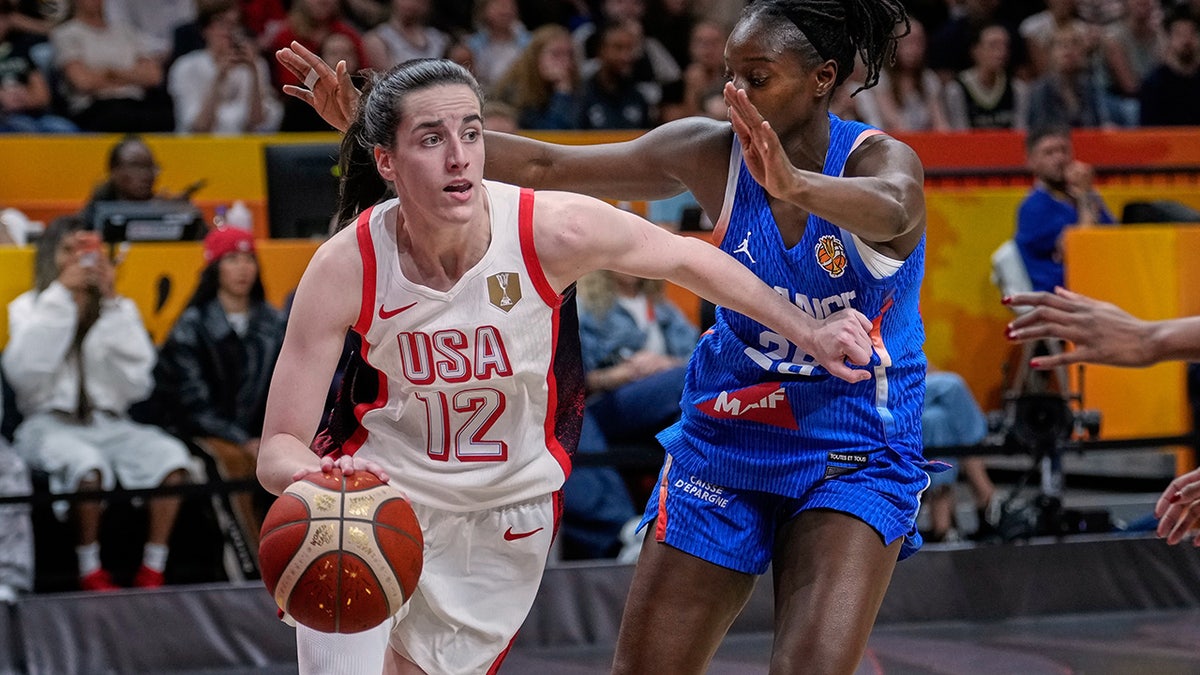
For nearly two quarters, France had Team USA searching for answers.
The American offense struggled to establish rhythm.
The veteran-heavy rotation looked vulnerable.
France attacked with confidence and built enough momentum to make the possibility of an American defeat feel increasingly real.
Then everything changed.
The veterans finally responded.
The defense tightened.
The difficult shots started falling.
France began making mistakes.
And when the younger group entered later, Caitlin Clark and the second unit protected the advantage rather than allowing the game to become dangerous again.
The result was a collective championship performance.
Breanna Stewart led the way with 22 points and 10 rebounds.
Jackie Young produced 18 points, six rebounds, and five assists.
Kahleah Copper added 15 points.
Chelsea Gray finished with 12 points, five assists, and four rebounds.
And Caitlin Clark delivered 12 points in only 13 minutes off the bench.
According to the podcast transcript, Clark also added rebounds and several assists while posting a plus-11 rating.
Her playing time was dramatically lower than the other leading scorers.
Yet she still tied Gray in points.
That immediately became one of the most interesting statistics from the championship game.
Clark did not start.
She did not receive 25 or 30 minutes.
She did not control the offense for the entire night.
But when she was given opportunities, she produced.
And now she leaves the tournament as a world champion.
The game itself began in a way that made Team USA supporters nervous.
France brought energy.
France played physically.
France attacked the Americans without appearing intimidated by the names on the opposing roster.
For much of the first half, Team USA looked uncomfortable.
The French advantage reportedly grew into double digits during the second quarter.
That was exactly the scenario critics of Kara Lawson’s rotation had warned about throughout the tournament.
Against weaker opponents, Team USA could afford slow beginnings.
Against France, that margin for error disappeared.
The Americans were facing a team with enough talent, confidence, and defensive intensity to punish every stagnant possession.
For several minutes, France did exactly that.
Team USA struggled to generate consistent offense.
The game slowed down.
The French defense grew increasingly comfortable.
The Americans suddenly looked like a team in danger of allowing the championship to slip away.
But the veteran group eventually responded.
The podcast had criticized Lawson’s commitment to her older starters throughout the tournament.
On championship day, however, those players finally delivered when the pressure reached its highest point.
Gray scored early.
Stewart remained reliable.
Young became aggressive.
Copper provided another scoring option.
And slowly, Team USA began cutting into the French lead.
The final moments of the first half became crucial.
Lawson eventually inserted Clark and Angel Reese late in the second quarter.
Then Clark created one of the most important momentum plays of the game.
She hit a three-pointer before halftime.
Instead of entering the locker room staring at a significant deficit, Team USA reportedly went into the break down by only two points.
That shot changed the atmosphere.
France had controlled much of the first half.
But the scoreboard suddenly told a different story.
Team USA had survived the worst stretch of the game and remained within one possession.
The Americans had 20 minutes to completely reset the championship.
They did exactly that.
Whatever happened inside the locker room at halftime, Team USA emerged with an entirely different level of urgency.
The transcript jokingly credits heating pads, muscle cream, and every recovery product imaginable for rejuvenating the veterans.
The humor reflected a larger criticism that followed Team USA all tournament.
Many fans believed Lawson trusted older players too heavily.
But in the third quarter of the championship game, the veterans justified that trust.
They refused to allow France to regain control.
The American defense became much more aggressive.
Passing lanes disappeared.
France struggled to find quality shots.
Turnovers increased.
And the shots that had been falling earlier began missing.
Meanwhile, Team USA started making the difficult baskets that championship teams eventually have to make.
Stewart became a steady offensive presence.
Young attacked.
Copper produced.
Gray provided another veteran response.
The result was a dramatic reversal.
France had spent the first half making Team USA look vulnerable.
By the middle of the second half, France suddenly looked like the team searching for answers.
The French offense began unraveling.
According to the podcast, Marine Johannes was held to only five points.
She reportedly shot one-for-six from three-point range and committed five turnovers.
For a player capable of changing a game with perimeter scoring, that was a major defensive victory for Team USA.
France’s ball security also deteriorated.
The Americans increased the pressure.
The passing became more rushed.
The decision-making became less precise.
And once France lost the lead, the psychological balance of the game appeared to shift completely.
That is often what happens in championship games.
One team controls the early emotion.
Then the favorite survives.
Once the favorite finally takes control, the underdog suddenly realizes the opportunity may be disappearing.
France had spent enormous energy building the lead.
Team USA had enough talent to erase it.
Once the Americans moved ahead, France never fully recovered.
This is where the younger players again became important.
The veteran group did the difficult work of turning the game around.
Then Lawson went deeper into the roster.
Clark entered.
Reese contributed.
Rhyne Howard provided defense.
Instead of allowing France to attack the second unit, the younger players maintained the pressure.
That was essential.
A championship lead means nothing if the next rotation immediately gives it away.
Clark and the younger group did not allow that to happen.
They continued pushing.
They continued defending.
They maintained the momentum created by the starters.
Clark’s final numbers were particularly impressive considering the minutes available.
Twelve points in 13 minutes is extraordinary scoring efficiency.
She was one of Team USA’s leading scorers despite playing less than half the minutes of several veterans.
That performance captured the strange reality of her entire tournament.
Clark remained a reserve.
Her role repeatedly generated controversy.
Fans questioned why she was not starting.
Critics challenged Lawson’s rotation.
Yet Clark continually found ways to influence games when she was given opportunities.
In the championship, she did it again.
Her three before halftime was especially important.
It did more than add points.
It reduced the psychological pressure entering the locker room.
A double-digit deficit feels dangerous.
A two-point game feels manageable.
Clark helped turn one situation into the other.
That is the type of contribution that rarely appears fully in a simple box score.
The podcast transcript listed Clark with 12 points and several assists.
It also emphasized her plus-11 rating.
Once again, the plus-minus discussion became relevant.
Clark did not need massive minutes to positively affect the scoreboard.
When she was on the floor, Team USA performed well.
Aliyah Boston also contributed valuable minutes throughout the tournament.
Reese continued bringing physicality.
Howard provided one of the strongest defensive contributions in the championship.
According to the source, Howard recorded four steals in approximately 16 minutes.
That type of production illustrates why Team USA’s depth remained its greatest advantage.
France could match the Americans for stretches.
Matching them for 40 minutes was another matter.
Lawson could turn toward another elite player every time she made a substitution.
A difficult first half did not eliminate that advantage.
Eventually, the depth became overwhelming.
That is why this championship deserves to be described as a collective victory.
The veterans deserve credit.
The young players deserve credit.
And Lawson, despite the criticism surrounding her throughout the tournament, ultimately deserves credit for finishing the job.
Her rotation philosophy was questioned almost daily.
Clark’s bench role became a national discussion.
Bueckers’ minutes were debated.
Reese’s role was debated.
Gray’s starting position was debated.
Copper’s role was debated.
And yet Team USA finished with gold.
Results do not automatically prove every coaching decision was correct.
But championships carry enormous weight.
Lawson can now point toward the final outcome.
The Americans survived difficult games.
They survived Italy.
They survived Spain.
They survived a dangerous first half against France.
And when the gold medal was finally decided, the veteran starters delivered their strongest collective response at exactly the right moment.
The podcast host repeatedly mocked that fact.
The phrase “a dead clock is right twice a day” became the running joke.
The implication was obvious.
After weeks of criticism, the veteran lineup finally produced the performance Lawson had been waiting for.
But championship basketball does not care how long it takes.
You only need the performance when the medal is actually on the line.
The veterans gave Lawson that performance.
Stewart’s 22 points and 10 rebounds established the foundation.
Young’s 18 points gave Team USA another aggressive offensive weapon.
Copper’s 15 finally provided the scoring critics had demanded.
Gray’s 12 points and five assists helped stabilize the backcourt.
Then Clark supplied 12 points in dramatically fewer minutes.
That balance is what ultimately separated Team USA from France.
One scorer did not have to carry everything.
The responsibility moved across the roster.
When one group struggled, another group responded.
When the younger players needed the veterans to recover the game, they did.
When the veterans handed the younger group a lead, that group protected it.
That is championship depth.
There will still be questions surrounding Clark’s role.
Winning gold does not erase them.
If anything, her championship performance may intensify the debate.
What would Clark have produced with 25 minutes instead of 13?
What would Team USA have looked like if she had started?
Could the offense have avoided the first-half struggles with more Clark-controlled possessions?
Those questions cannot be answered now.
The tournament is over.
The medal has been won.
Lawson’s decisions led Team USA to the championship.
But Clark’s efficiency ensures the starting-lineup debate will continue long after the celebration.
There is also the unusual situation surrounding Paige Bueckers.
According to the transcript, Bueckers played only two minutes and 38 seconds.
The podcast host openly questioned the decision.
Was Bueckers dealing with an injury?
Was the rotation simply shortened for the championship?
Did Lawson decide other players offered better matchups against France?
The supplied transcript did not provide a confirmed explanation.
Therefore, there is no reason to invent one.
What can be said is that Lawson trusted a significantly different rotation once the championship became tight.
That is normal in high-pressure basketball.
Coaches shorten benches.
Minutes become harder to earn.
Matchups matter more.
Every possession becomes valuable.
Clark, however, still found her opportunity.
And when it arrived, she scored.
That may be the most encouraging part of her tournament.
Clark did not need the perfect role to remain productive.
She did not need every possession.
She did not need enormous volume.
She adjusted.
In previous stages, she influenced games primarily through passing.
In the championship, scoring became more important.
She responded with 12 points.
That versatility matters moving forward.
Clark has often been defined by enormous scoring numbers and highlight passes.
International basketball asked her to become something different.
She needed to operate inside a roster where nearly everyone could score.
She needed to accept fewer touches.
She needed to remain ready despite inconsistent minutes.
She needed to impact games quickly.
The championship game demonstrated that she could do exactly that.
Thirteen minutes.
Twelve points.
Several assists.
A positive plus-minus.
A crucial three before halftime.
And a gold medal.
That is not a bad championship résumé.
For Lawson, the final also represents vindication with an important warning attached.
She won.
Her veteran group delivered.
But the first half showed how close Team USA came to putting itself in an extremely dangerous position.
Against another opponent, the comeback may not have happened.
Against France, it did.
That should not prevent the coaching staff from evaluating what caused the early problems.
Championship teams improve even after winning.
They study the uncomfortable moments.
They ask why the offense became stagnant.
They examine which combinations worked.
They identify which players created momentum.
They do not simply assume the medal means every decision was perfect.
Team USA now has the luxury of asking those questions while wearing gold.
France deserves significant credit as well.
The final was competitive because France refused to accept the expected script.
They attacked.
They defended.
They built a lead.
They forced the Americans into uncomfortable basketball.
For a significant portion of the game, they made the possibility of an upset feel real.
Eventually, Team USA’s talent became too much.
But France showed exactly why championship games are played rather than decided by reputation.
The Americans had to earn this one.
And when the moment demanded it, they did.
Stewart delivered.
Young delivered.
Copper delivered.
Gray delivered.
Howard defended.
Clark produced in limited minutes.
The younger players maintained the lead.
The veterans created it.
That balance ultimately carried the United States across the finish line.
For Clark, the moment becomes another chapter in a remarkable rise.
She entered the tournament under enormous scrutiny.
Every substitution became a debate.
Every benching became a headline.
Every strong performance restarted the argument about whether she should start.
Now none of that changes the most important fact.
Caitlin Clark is a world champion.
She scored 12 points off the bench in the championship game.
She hit an important three before halftime.
She helped Team USA finish the comeback.
And she will leave the tournament with gold around her neck.
Kara Lawson will leave with the same medal.
Her critics can continue questioning the rotations.
They can question Clark’s minutes.
They can question the heavy reliance on veterans.
They can question why Team USA allowed France to control the opening stages.
But they cannot question the final result.
Team USA won.
France pushed them.
The veterans finally answered.
The younger players protected the momentum.
And when the championship pressure reached its highest point, the deepest roster in the tournament found enough answers to finish the job.
Gold belongs to Team USA.
And for Caitlin Clark, 13 minutes were enough to make sure her fingerprints were all over the final.


