Caitlin Clark entered the 2026 FIBA Women’s Basketball World Cup surrounded by one question that seemed increasingly difficult for Team USA to answer.
What exactly was her role supposed to be?
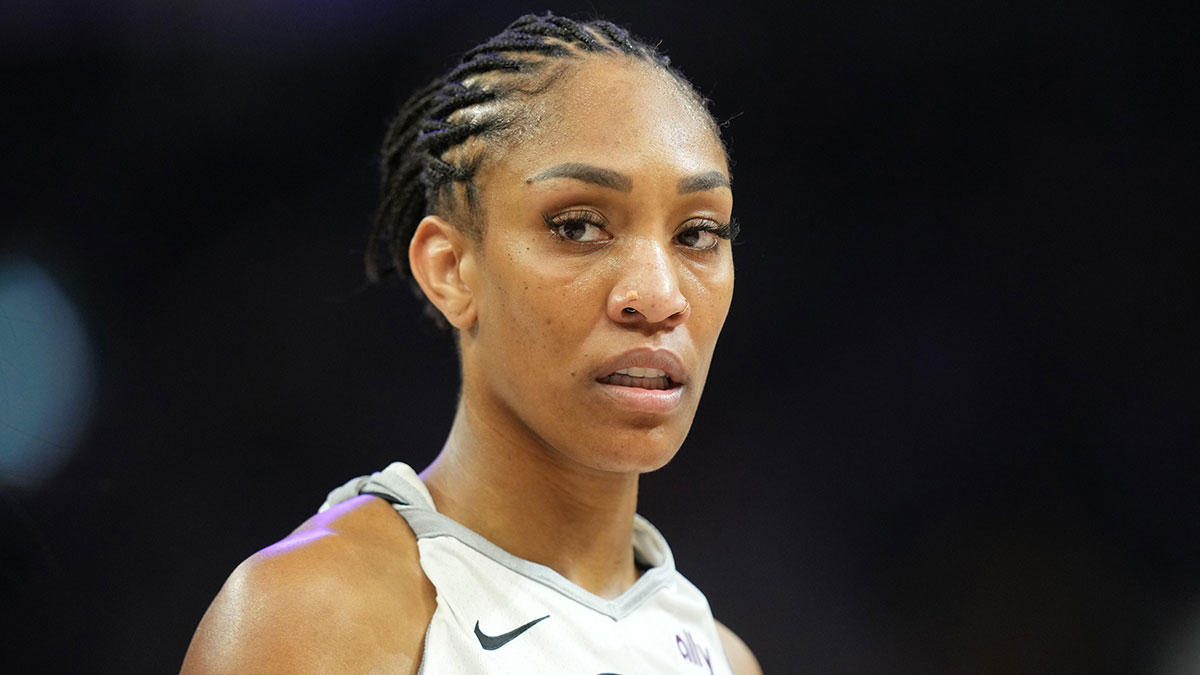
Head coach Cara Lawson had praised Clark’s pace, scoring ability, passing vision, and ability to change games before the tournament began.
Yet Lawson also said minutes and roles were still being evaluated.
That apparent contradiction immediately became a major talking point.
Clark was coming off one of the strongest seasons of her professional career and had already produced successfully in international competition.
Still, Team USA publicly described itself as remaining in a fact-finding stage.
The reasoning was understandable in one respect.
International basketball is different from the WNBA.
Spacing changes.
Physicality changes.
Defensive schemes change.
National teams also have limited preparation time and must rapidly determine which combinations function best together.
Clark was entering her first senior World Cup.
Lawson therefore had legitimate reasons to test lineups rather than permanently commit before meaningful games began.
But fans saw a different problem.
The coach appeared able to explain exactly why Clark’s skill set was valuable while refusing to say whether those strengths deserved a starting role.
That gap fueled the controversy.
The source describes Clark as averaging more than 21 points and eight assists during the 2026 WNBA season.
It also credits her with another remarkable collection of career milestones.
According to the supplied account, Clark reached 1,000 career points in only her 54th WNBA game.
She also became the fastest player to combine 1,000 points, 250 rebounds, and 250 assists.
The transcript says another record followed shortly afterward.
Clark reportedly reached 500 career assists in 59 games.
The source contrasts that with Sue Bird, who reportedly needed 82 games to reach the same mark.
Those numbers formed the background to the debate.
This was no longer a rookie being evaluated primarily on potential.
Clark had accumulated professional production substantial enough to justify serious responsibility.
Her 2025 season had reportedly been interrupted by injuries.
The source says she played only 13 games while dealing with a groin problem and an ankle bone bruise.
Even during that limited season, Clark remained enormously popular.
The transcript says she received more than 1.2 million fan votes and was selected as an All-Star captain.
Then came 2026.
The source presents that season as Clark’s strongest professional stretch yet.
She reportedly averaged 21.2 points, 8.2 assists, and four rebounds while shooting approximately 43 percent.
That performance also coincided with enormous commercial attention.
The transcript portrays Indiana as one of the WNBA’s biggest television attractions.
It argues that Clark had become a major driver of national interest in the league.
Popularity should not determine a national-team lineup.
Performance should.
But Clark’s performance was strengthening the same argument her popularity had already created.
Then there was her international résumé.
According to the source, Clark participated in the World Cup qualifying tournament in Puerto Rico earlier in 2026.
The Americans reportedly went 5–0.
Clark averaged 11.6 points and 6.4 assists.
The transcript says she was named tournament MVP.
That detail matters because Lawson’s pre-tournament language emphasized the need to discover how international defenses would handle Clark.
Clark had already experienced senior international basketball.
She had already dealt with different rules.
She had already faced tighter spacing and more physical coverage.
She had already succeeded.
The source also notes that Clark earned MVP honors at the FIBA U19 World Cup in 2021.
That history does not mean every new tournament automatically produces the same result.
It does make Clark far less mysterious than the phrase “fact-finding” might suggest.
Fans became particularly frustrated by the qualifier rotation.
According to the transcript, Team USA rotated several players through the starting lineup.
Clark reportedly became the final player to receive a start.
Chelsea Gray started regularly.
That became the foundation for one of the most polarizing debates surrounding the roster.
Gray’s credentials are substantial.
She owns Olympic experience.
She has championship experience.
She understands high-pressure possessions.
She can control games without needing extreme pace.
Those qualities are particularly valuable in international basketball.
Clark offers something different.
She accelerates.
She attacks before defensive structures become comfortable.
Her shooting range forces defenders to operate outside their preferred positions.
Her passing turns small defensive mistakes into immediate opportunities.
The argument therefore should not simply be Clark versus Gray.
It is partly a debate about offensive identity.
Team USA also experienced major roster changes before Berlin.
The source says A’ja Wilson was unavailable because of back concerns.
Kelsey Plum was also described as unavailable because of a lower-leg injury.
Those absences changed the offensive equation.
Wilson normally gives Team USA a dominant interior centerpiece.
Without that presence, perimeter creation becomes even more important.
The Americans need guards capable of manufacturing advantages before the defense can settle.
That profile sounds remarkably similar to the one Lawson herself used when discussing Clark.
Pace.
Scoring.
Playmaking.
Spacing.
Those qualities appeared increasingly necessary for this specific roster.
The source therefore argues that Clark’s skill set resembled that of a starting point guard rather than merely a reserve weapon.
That conclusion remained debatable before the tournament.
Then the opening game against China arrived.
Team USA announced its starting five.
Clark was not included.
Neither were Paige Bueckers or Angel Reese.
The source describes the starters as Napheesa Collier, Kahleah Copper, Chelsea Gray, Breanna Stewart, and Jackie Young.
All five were returning veterans.
That immediately reinforced the perception that continuity and experience were driving the decision.
There is a legitimate basketball case for continuity.
National teams do not have months to build chemistry.
Players who have competed together previously can execute more quickly.
They understand terminology.
They know defensive responsibilities.
They recognize one another’s preferred locations.
Those advantages matter.
But Clark changed the argument once she entered the game.
According to the transcript, Team USA’s offensive tempo shifted almost immediately after she checked in against China.
The ball advanced faster.
Passing became more aggressive.
Teammates began receiving opportunities before the defense could establish normal coverage.
Clark did not simply chase her own scoring numbers.
She organized the game.
By the final buzzer, the United States had won 94–61.
Clark reportedly finished with 14 points, 11 assists, three rebounds, and zero turnovers in approximately 25 minutes.
That final number was particularly striking.
Clark has built her game around ambitious passes and rapid decision-making.
Playing fast without committing a single turnover suggests an unusual level of control.
Her plus-minus reportedly finished at plus-30.
The source says that was the highest mark on Team USA.
Clark also reportedly tied Bueckers and Rhyne Howard for the American scoring lead.
But the assists became the defining statistic.
Eleven assists in a World Cup debut are difficult to dismiss as a temporary spark from the bench.
They suggest offensive command.
The source credits Clark with several historical milestones from that performance.
It says her 11 assists were the most by a Team USA player in a World Cup debut.
It also says she set an American World Cup mark for assists without a turnover.
The transcript additionally compares her performance with Dawn Staley and Teresa Edwards.
Those historical claims come from the supplied account.
Whatever the final record-book classification, the performance itself clearly strengthened Clark’s case.
She had been described as an unknown variable.
Then she delivered an extremely efficient game.
She had been placed on the bench.
Then she changed the tempo.
She had been asked to fit into a veteran-heavy roster.
Then she made those teammates easier to find.
That last point may be the most important.
Clark’s greatest value is not always her own scoring.
Her passing can make superior finishers even more dangerous.
Team USA has plenty of players capable of converting open opportunities.
The harder task is creating those opportunities.
Clark can do that in unusual ways.
She throws passes before defenses believe the window exists.
She pushes rebounds into transition before opponents establish matchups.
She stretches coverage because defenders fear her shooting range.
Every one of those actions can improve another player’s statistics.
Clark herself reportedly emphasized that after the China victory.
The source quotes her describing the luxury of passing to teammates who feel as though they will never miss.
That perspective explains why she may fit Team USA so naturally.
She does not need to become a 30-point scorer every night.
She can make a roster filled with elite scorers more efficient.
Lawson acknowledged the impact afterward.
According to the source, she described Clark as terrific off the bench and said Clark changed the tempo of the game.
That language closely resembled her pre-tournament praise.
The difference was that the theory had now become performance.
The question therefore changed.
Before China, Team USA could say it needed evidence.
After China, the evidence was sitting in the box score.
That does not automatically mean Clark must start.
Basketball rotations involve more than rewarding the player with the strongest previous game.
Lawson could believe Clark provides greater strategic value against second units.
There is logic to that approach.
A veteran group can establish stability.
Then Clark can enter and completely alter the game’s speed.
Opponents must suddenly defend a different style.
That tactical contrast can be powerful.
The question is whether Team USA sacrifices too much by waiting.
Clark’s shooting gravity can improve possessions from the opening tip.
Her transition passing can create immediate pressure.
Her chemistry with younger, faster players may produce advantages before opponents settle.
Using those strengths only after the game has already established a rhythm could reduce their impact.
This becomes especially significant without Wilson.
Team USA cannot simply rely on overwhelming interior dominance.
The roster needs other ways to bend defenses.
Clark provides one.
That is where Sue Bird’s role becomes interesting.
The source describes Bird as managing director of the women’s national team.
Her responsibility involves constructing a roster capable of winning now while also preparing for the 2028 Los Angeles Olympics.
That creates a difficult balance.
Veterans remain essential.
The next generation also needs meaningful experience.
Clark, Bueckers, and Reese represent part of that future.
The source describes Team USA as a bridge between eras.
That metaphor works only if both sides contribute.
A veteran-heavy starting lineup is not inherently wrong.
A young-player takeover is not inherently right.
The best outcome combines them.
Stewart can thrive with Clark’s passing.
Collier can benefit from improved spacing.
Gray can provide control in specific lineups.
Bueckers can attack defenses already shifted by Clark.
Reese can punish the glass.
That should be the objective.
The public argument becomes less useful when it turns into claims that veterans are receiving minutes solely because of seniority.
There is no need to assume improper motives.
The strategic question is strong enough.
Which five players give Team USA the greatest advantage against a particular opponent?
The China game provided one powerful data point.
It should influence Lawson’s next decision without completely dictating it.
Clark’s popularity introduces another layer.
Fans reportedly traveled internationally hoping to watch her.
Her games attract significant attention.
Her presence can influence ticket demand and television audiences.
That commercial reality cannot choose the starting lineup.
It can increase scrutiny around the decision.
When thousands of fans spend money to watch one player, seeing that player begin on the bench naturally creates disappointment.
Coaches cannot prioritize that disappointment over winning.
But if playing Clark more also improves the basketball, commercial and competitive interests may align.
That is when the decision becomes harder to resist.
The source argues that Clark has repeatedly answered questions through performance rather than public confrontation.
Her postgame comments support that image.
She reportedly praised teammates.
She accepted whatever role Team USA assigned.
She avoided criticizing Lawson.
That professionalism gives the coaching staff room to experiment.
It also places more responsibility on the staff to interpret her performance fairly.
Clark does not need to demand minutes publicly.
The game can make the argument for her.
China did exactly that.
The more Clark produces, the less convincing abstract explanations become.
“Fact-finding” must eventually reach a conclusion.
A tournament cannot remain an experiment forever.
As games become more important, Lawson must determine her preferred combinations.
Starting is not everything.
Closing matters more.
Total responsibility matters.
Who handles the ball during difficult possessions matters.
Who creates the first advantage matters.
Those decisions will reveal Clark’s real status more clearly than an introductory lineup graphic.
That is where the broader conversation should focus.
If Clark starts but becomes a stationary off-ball player, the symbolic promotion means little.
If she remains a reserve but controls 25 meaningful minutes, the tactical impact could still be enormous.
Role matters more than ceremony.
The 2028 Olympics add another dimension.
The World Cup functions as a major opportunity to identify the foundation of the next Olympic team.
Clark will likely remain central to that discussion if her performance continues at this level.
Bueckers may as well.
Reese could become another important piece.
The veterans still have championship value.
Team USA’s job is managing that transition before it becomes a conflict.
The best way to accomplish that is merit.
Play the combinations that work.
Reward players producing advantages.
Adjust when opponents expose weaknesses.
Do not cling to reputation.
Do not chase popularity either.
Let basketball provide the answer.
Clark’s World Cup debut offered an unusually clear answer in one game.
Fourteen points.
Eleven assists.
Zero turnovers.
A dominant team margin during her minutes.
That is the kind of performance coaches are supposed to notice.
It does not erase Gray’s accomplishments.
It does not guarantee Clark will dominate every opponent.
It does create pressure for Lawson to test a larger role.
That is why the next few games matter so much.
If Clark struggles, the coaching staff may appear wise for maintaining flexibility.
If she continues controlling games while coming from the bench, the argument for expanding her role will become stronger.
If Team USA encounters a close game and the offense stalls, every Clark minute will be analyzed.
That pressure comes with coaching a national team filled with stars.
Lawson knew that when she accepted the position.
Clark creates a particularly intense version because her performance and popularity reinforce one another.
The easiest outcome for Team USA is also the most difficult for opponents.
Build a system where Clark’s passing enhances veterans rather than replacing them.
Let experience stabilize the defense.
Let youth increase pace.
Let Stewart finish.
Let Bueckers attack.
Let Reese and the remaining bigs exploit space around the rim.
And let Clark create the advantages connecting everything.
That version of Team USA could make the starting-lineup debate almost irrelevant.
Winning has a way of reducing controversy.
But if the Americans struggle while Clark’s best skills remain underused, the questions will return immediately.
The debate is therefore no longer whether Caitlin Clark belongs on the World Cup stage.
According to the performance described against China, she already answered that.
The question is whether Team USA will treat that performance as information or merely as another temporary experiment.
Clark does not need the starting position to prove she can influence a game.
She already showed that from the bench.
But the possibility hanging over the entire tournament is far more intriguing.
What happens when Cara Lawson stops asking how Caitlin Clark fits into Team USA and starts asking how dangerous Team USA becomes when the offense fully fits Caitlin Clark?


