Team USA entered the FIBA Women’s World Cup final as the powerhouse everyone expected to win.
According to the supplied transcript, France spent much of the first half threatening to destroy that expectation.
The video says the United States eventually defeated France 97-79 in Berlin to capture another World Cup gold medal.
But the final score reportedly concealed how dangerous the game became before halftime.
France built a 14-point advantage.
Gabby Williams was attacking the American defense.
Marine Johannes was connecting from outside.
According to the transcript, France was shooting 63 percent from three-point range before halftime.
For stretches, the United States appeared unable to control the game.
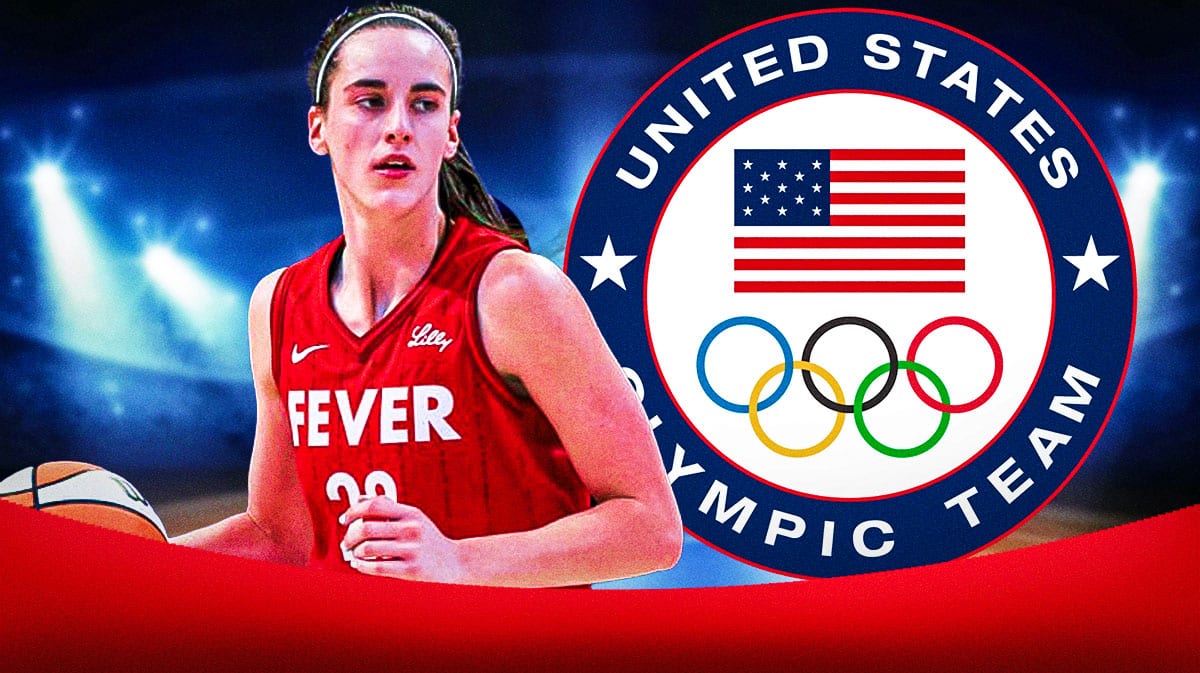
Then Caitlin Clark changed its momentum.
According to the source, Clark received the basketball as the halftime clock approached zero and buried a three-pointer from the left elbow.
The shot reportedly cut France’s lead to only two points.
Team USA entered halftime trailing 45-43.
The video portrays that moment as the emotional turning point of the championship.
France had controlled much of the opening half.
Suddenly, the Americans walked into the locker room only one possession behind.
The significance becomes greater when Clark’s tournament struggles are considered.
According to the transcript, Clark entered the championship game averaging seven points while shooting 29 percent overall and 22 percent from three-point range.
Those numbers had generated criticism.
Some observers questioned whether Clark’s game translated naturally to international basketball.
Others questioned Kara Lawson’s handling of her.
The video says Clark had been operating primarily in a reserve role despite the enormous attention surrounding her participation.
Lawson had previously acknowledged Clark’s shooting difficulties.
According to the transcript, however, Lawson emphasized Clark’s playmaking rather than publicly demanding more scoring.
The video interprets that response as intentional pressure management.
Instead of predicting an offensive breakout, Lawson focused attention on what Clark could contribute even when her shot was not falling.
Then came the World Cup final.
And when Team USA desperately needed momentum, Clark reportedly delivered the shot that changed the atmosphere.
Angel Reese had forced a turnover during the closing seconds of the half.
The basketball reached Clark.
She fired.
The shot dropped.
According to the transcript, Team USA erupted.
Reese’s stunned reaction immediately became part of the moment.
Clark reportedly reacted very differently.
Rather than exploding in celebration, she simply turned toward the tunnel.
The narrator interprets her body language as quiet confidence.
The message was simple.
Team USA was still alive.
What happened after halftime proved how important that was.
According to the video, the United States demolished France 30-12 during the third quarter.
The championship changed completely.
Breanna Stewart became one of the driving forces.
The transcript describes Stewart attacking the rim, rebounding aggressively, finding cutters and establishing the veteran presence Team USA desperately needed.
Jackie Young also became crucial.
According to the source, Young finished with 18 points, six rebounds and five assists.
The video claims that performance made her the first player in Women’s World Cup history to record at least 15 points, five rebounds and five assists in a final.
Chelsea Gray contributed another veteran dimension.
The transcript credits Gray with 12 points and five assists while describing her control of the offense as one of the stabilizing forces behind the comeback.
Afterward, Gray reportedly summarized the turnaround with a simple idea.
Team USA did it “by committee.”
That description matters because Clark’s dramatic shot could easily dominate the narrative.
The transcript instead presents the championship as a combination of generations and roles.
Clark changed momentum.
The veterans then crushed France during the third quarter.
France’s biggest offensive weapon suddenly disappeared.
According to the source, Williams scored 16 points during the first half.
She scored zero during the third quarter.
The video says she eventually finished with 20 points and seven assists, meaning most of her production arrived before the American defense transformed the game.
France’s offense had looked dangerous enough to threaten an upset.
Then Team USA tightened its defense.
The opportunities disappeared.
But Clark’s championship contribution was not finished.
According to the transcript, she returned during the fourth quarter and immediately became aggressive.
She reportedly converted a driving layup and another three-pointer.
Clark finished with 12 points on four-of-five shooting.
The video says she played approximately ten and a half minutes.
That efficiency represented a dramatic change from earlier tournament performances.
The transcript specifically contrasts the final with Clark’s reported 0-for-6 performance against Italy.
When the championship was at stake, the shots finally fell.
Clark also reportedly received a technical foul after arguing an offensive-foul call.
The narrator portrays the incident as another example of the competitiveness that has followed Clark throughout her career.
Her final stat line was not the biggest on Team USA.
But her timing became the story.
Clark’s points arrived when momentum mattered.
That distinction creates a fascinating debate around Lawson.
Throughout the tournament, according to the transcript, fans criticized Lawson for refusing to start Clark, Reese and Paige Bueckers.
The veteran starting unit remained intact.
Lawson stayed with Stewart, Young, Kahleah Copper, Gray and Napheesa Collier.
The criticism intensified as younger players generated attention from fans.
Yet according to the video, the World Cup final ultimately validated part of Lawson’s strategy.
The veteran lineup produced the devastating third-quarter run.
Team USA outscored France 30-12 during that period.
The same veterans whose roles had been questioned became responsible for breaking the championship open.
That makes the result more complicated than a simple Clark-versus-veterans argument.
Lawson trusted her veteran structure.
The veterans delivered.
Clark provided explosive production in limited minutes.
Both things can be true.
The narrator argues that Lawson therefore emerged from Berlin with a powerful response to her critics.
She absorbed weeks of pressure.
She maintained the rotation.
Team USA won gold.
But the video also argues that winning the championship does not permanently settle the debate.
France exposed vulnerabilities.
According to the transcript, Team USA needed to recover from a 14-point deficit against an opponent that has already challenged American dominance.
The video connects this final with the Paris Olympics.
France is presented not as a temporary threat, but as an ascending international program.
The transcript points toward its WNBA talent and emerging young players.
That means the United States cannot assume future tournaments will follow the same script.
Its margin for error may be shrinking.
Clark’s role therefore becomes part of a larger generational question.
How should Team USA combine the veterans who have built its dominance with younger players whose primes are approaching?
The narrator believes that question will become unavoidable before the 2028 Los Angeles Olympics.
Clark will be older.
Reese will be older.
Bueckers will be older.
Aliyah Boston will be older.
At the same time, several veteran stars will be moving deeper into their thirties.
The championship in Berlin may therefore represent a transition point.
The old generation still controls major roles.
The new generation is already producing championship moments.
Clark embodies that transition more visibly than anyone.
The transcript says she led Team USA in assists during the tournament at 5.8 per game.
It also claims she led the roster in plus-minus.
Her tournament debut against China reportedly produced 14 points, 11 assists and zero turnovers.
Those numbers help explain why evaluating Clark exclusively through scoring would miss much of her impact.
She can influence games without taking the most shots.
Her passing can reorganize an offense.
Her shooting gravity can stretch defenses.
And in the championship, according to the source, her own scoring arrived precisely when Team USA needed it.
That combination creates the central question heading toward Los Angeles.
Can Clark remain a reserve if her overall influence continues expanding?
The video believes the answer will eventually be no.
Its prediction is explicit.
By the 2028 Olympics, the narrator expects Clark to become a starter and believes Team USA’s offense will eventually be structured around her playmaking.
That is a prediction rather than an established future outcome.
 Roster decisions will depend on performance, health, coaching and the development of other players.
Still, the argument illustrates how dramatically the conversation has changed.
Clark entered this tournament facing questions about whether she should start.
She leaves, according to the transcript, with a gold medal and a defining championship moment.
The commercial dimension makes the situation even more complicated.
The video cites strong television audiences during earlier Team USA games.
It argues that Clark and Reese were major drivers of interest.
That conclusion is the narrator’s interpretation rather than something demonstrated by ratings alone.
But Clark’s ability to attract attention is central to the video’s broader argument.
International basketball gives her another platform.
Fans who may have discovered Clark through college basketball or the WNBA are now following Team USA.
The transcript even describes a fan traveling from Australia to watch Clark play in Europe.
Clark herself reportedly framed that attention as an opportunity to grow basketball globally.
That perspective matters.
Her popularity can create pressure.
It can create distractions.
It can create endless rotation debates.
But it can also introduce new audiences to international women’s basketball.
The championship final offered those audiences far more than a Clark highlight reel.
They saw Stewart produce an MVP-level performance.
They saw Young deliver a historic final.
They saw Gray control possessions.
They saw France threaten the American dynasty.
And they saw Clark produce a momentum-changing shot.
That may be the strongest argument for blending generations rather than framing them as competitors.
Team USA does not necessarily need to choose between Clark and the veterans.
Its greatest advantage may come from combining them correctly.
Stewart was reportedly named tournament MVP.
According to the transcript, she delivered 22 points and ten rebounds in the final.
The video says she also passed Cheryl Miller on the United States World Cup scoring list.
Her postgame message emphasized collective success.
“We’re the standard.”
“It’s always about us.”
The narrator interprets those words as a veteran planting her flag during a period when attention is increasingly shifting toward younger stars.
But they can also be understood more simply.
Championship basketball requires more than one player.
Clark’s buzzer-beater mattered.
Stewart’s dominance mattered.
Young’s shooting mattered.
Gray’s control mattered.
Reese’s defensive contribution mattered.
The comeback required all of them.
That is why the final creates such an intriguing challenge for Lawson.
Winning vindicated her veteran lineup.
Clark’s performance simultaneously strengthened the argument for expanding her role.
Those conclusions are not mutually exclusive.
Lawson can have been right about Berlin while still needing a different answer for Los Angeles.
The narrator compares that challenge with generational transitions previously faced by USA Basketball.
The exact historical circumstances are different.
But the underlying coaching problem is recognizable.
Successful national programs must know when experience remains essential and when emerging stars deserve greater control.
Make the transition too early and valuable veteran stability can disappear.
Make it too late and younger talent can become constrained.
The next two years will determine where Team USA finds that balance.
Clark will be at the center of the conversation.
So will Reese.
So will Bueckers.
So will Boston.
And whoever remains from this championship veteran core will have their own case for continuing to lead.
For now, however, the result is undeniable within the supplied story.
Team USA faced serious trouble.
France built a 14-point lead.
Clark delivered a massive shot before halftime.
The veterans dominated the third quarter.
Clark returned with efficient fourth-quarter scoring.
The Americans won 97-79.
Stewart left as tournament MVP.
Clark left with her first major international championship moment.
Lawson left with a gold medal and stronger evidence that her controversial rotation could survive the biggest test of the tournament.
Yet the final question raised by the video remains unresolved.
What happens when Team USA reaches Los Angeles in 2028 and Clark is no longer the young star waiting for additional minutes?
What happens when she enters her prime?
Berlin allowed Lawson to postpone that decision.
Los Angeles may force her to make it.


