The supplied YouTube transcript presents an explosive account of an alleged Team USA coaching crisis involving Caitlin Clark, Cara Lawson, Stephanie White, and Nate Tibbetts.
According to the transcript, the controversy began when Lawson and White reportedly removed Clark during a crucial stretch of international competition.
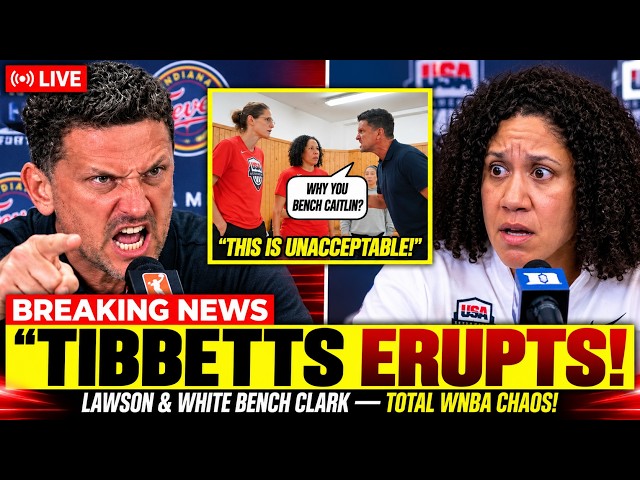
The video frames the decision as more than a normal substitution or rotation choice.
It claims Clark was being used in a limited role despite her reputation as one of basketball’s most creative playmakers.
The transcript also portrays Tibbetts as increasingly frustrated with the coaching strategy.
It alleges that he believed Clark’s abilities were being restricted by a system that kept her away from the ball.
The video repeatedly describes this situation as a conflict between Clark’s global popularity and the coaching staff’s desire to maintain control.
Those claims are presented dramatically in the transcript, but they are not independently verified by the source provided.
The alleged tension reportedly intensified during a high-stakes international game.
The opposing defense is described as packing the paint and forcing Team USA into slower half-court possessions.
The transcript claims Clark could have helped push the pace, create open looks, and stretch the floor.
Instead, it says Lawson signaled for Clark to be removed during the most important portion of the game.
That decision allegedly shocked viewers and created immediate questions about Team USA’s offensive plan.
The video says Clark remained on the bench while the team continued running more static offensive sets.
It portrays Tibbetts as visibly angry while watching the decision unfold.
After the final buzzer, the transcript claims Tibbetts followed the coaching staff into a private area.
It alleges that he confronted Lawson and White over Clark’s limited role.
The account describes a heated exchange involving shouting, accusations, and security intervention.
Because the transcript is highly dramatized, those details should be treated as claims made by the video rather than confirmed events.
The alleged confrontation becomes the first major turning point in the story.
The video claims a security camera captured the incident and that footage later appeared online.
It further alleges that the footage showed Tibbetts accusing the coaches of intentionally limiting Clark.
The transcript presents this as evidence of a deeper conflict inside the national program.
However, the supplied source does not provide independent confirmation of the recording, its authenticity, or the alleged motives behind the confrontation.
The story then expands from a coaching disagreement into an alleged locker-room rebellion.
According to the transcript, Lawson and White later defended their decisions during an unsanctioned media briefing.
The video claims Lawson described Clark’s style as damaging to team chemistry.
It also says White argued that no individual player should control the direction of USA Basketball.
Those alleged comments reportedly intensified anger among other players.
The transcript names Paige Bueckers, Aliyah Boston, and Angel Reese as figures connected to an alleged player revolt.
It claims the roster confronted executives and warned that players could refuse to participate if Tibbetts were punished.
The video further alleges that Lawson and White could be removed before future knockout-round games.
Again, these developments are described only by the supplied transcript.
No official statement, verified recording, or independently sourced report is included with the material.
The alleged player rebellion is important because it changes the controversy from a dispute about one rotation decision into a question about authority.
If the transcript’s account were accurate, the players would not simply be defending Clark’s minutes.
They would be challenging the power structure responsible for selecting lineups, managing public statements, and setting the team’s direction.
The story then introduces alleged leaked emails from Lawson’s personal device.
According to the video, the documents supposedly connected the benching controversy to wider WNBA and corporate interests.
The transcript claims rival executives wanted Clark’s commercial momentum slowed before future labor negotiations and media-rights discussions.
It portrays Lawson and White as participants in a broader plan to restrict Clark’s influence.
Those are extremely serious allegations, and the supplied transcript does not establish them as factual.
The video offers no independently verified documents, named investigative outlet, or official response that would confirm the claims.
The alleged email leak becomes the second major escalation in the story.
It shifts the focus from coaching philosophy to questions about politics, branding, player power, and institutional control.
The transcript suggests that Clark’s popularity created tension because her growing influence could affect how teams, sponsors, and league executives negotiated with players.
Whether that interpretation is accurate remains unresolved based on the source material.
The video then describes a wave of alleged public backlash.
It claims sponsors issued emergency statements, fan groups gathered near the team hotel, and network executives demanded answers.
The transcript also describes emotional reactions from players and supporters.
Aliyah Boston is allegedly shown discussing the crisis during a livestream.
Paige Bueckers and Angel Reese are described as publicly supporting Clark and criticizing institutional politics.
These moments are used by the video to frame the situation as a generational conflict inside women’s basketball.
The transcript’s final section introduces another alleged twist involving leaked audio from a federation board meeting.
It claims senior officials ordered Lawson and White to limit Clark’s role because of concerns about her growing economic influence.
The video further alleges that the coaches were promised protection while carrying out the supposed plan.
Clark’s legal team is then described as filing a federal lawsuit involving conspiracy and interference claims.
The transcript also claims that Lawson threatened to release additional messages and recordings.
None of those legal or administrative developments are independently verified within the supplied source.
The overall narrative ends with the future of the program supposedly hanging in the balance.
The video asks whether Lawson and White were acting independently, following instructions, or becoming targets in a much larger power struggle.
It also asks whether Clark’s benching represented a legitimate tactical decision or an attempt to reduce her influence.
Those questions are the central reason the story is designed to generate debate.
At its core, the transcript combines three controversies.
The first is the alleged confrontation involving Tibbetts after Clark was benched.
The second is the reported player rebellion against the coaching structure.
The third is the alleged leak of emails and audio that supposedly connects the dispute to wider institutional politics.
The supplied material presents all three developments as part of one escalating crisis.
A responsible reading should separate what the video claims from what has actually been established.
The transcript provides a dramatic narrative, but it does not independently verify the alleged confrontation, leaks, conspiracy, lawsuit, sponsor reaction, or player walkout.
That distinction matters because the story includes serious accusations involving real people.
The strongest confirmed element within the supplied material is the existence of a controversy surrounding Clark’s role and the coaching decisions described by the video.
The rest should be discussed as allegations, claims, or reported developments until supported by reliable evidence.


