The Remark That Brought the Forum to a Standstill
The bipartisan leadership forum in Phoenix was already approaching a breaking point when Representative Jamie Raskin turned toward Congressman Jim Jordan.
Their disagreement had begun with government accountability, congressional oversight, and the responsibilities of elected officials toward Americans who disagreed with them.
But the discussion suddenly became personal.
Raskin leaned toward his microphone and delivered a remark that immediately changed the atmosphere.
“Sit down, boy.”
The auditorium fell silent.
Several audience members looked toward the moderator, apparently expecting an immediate intervention.
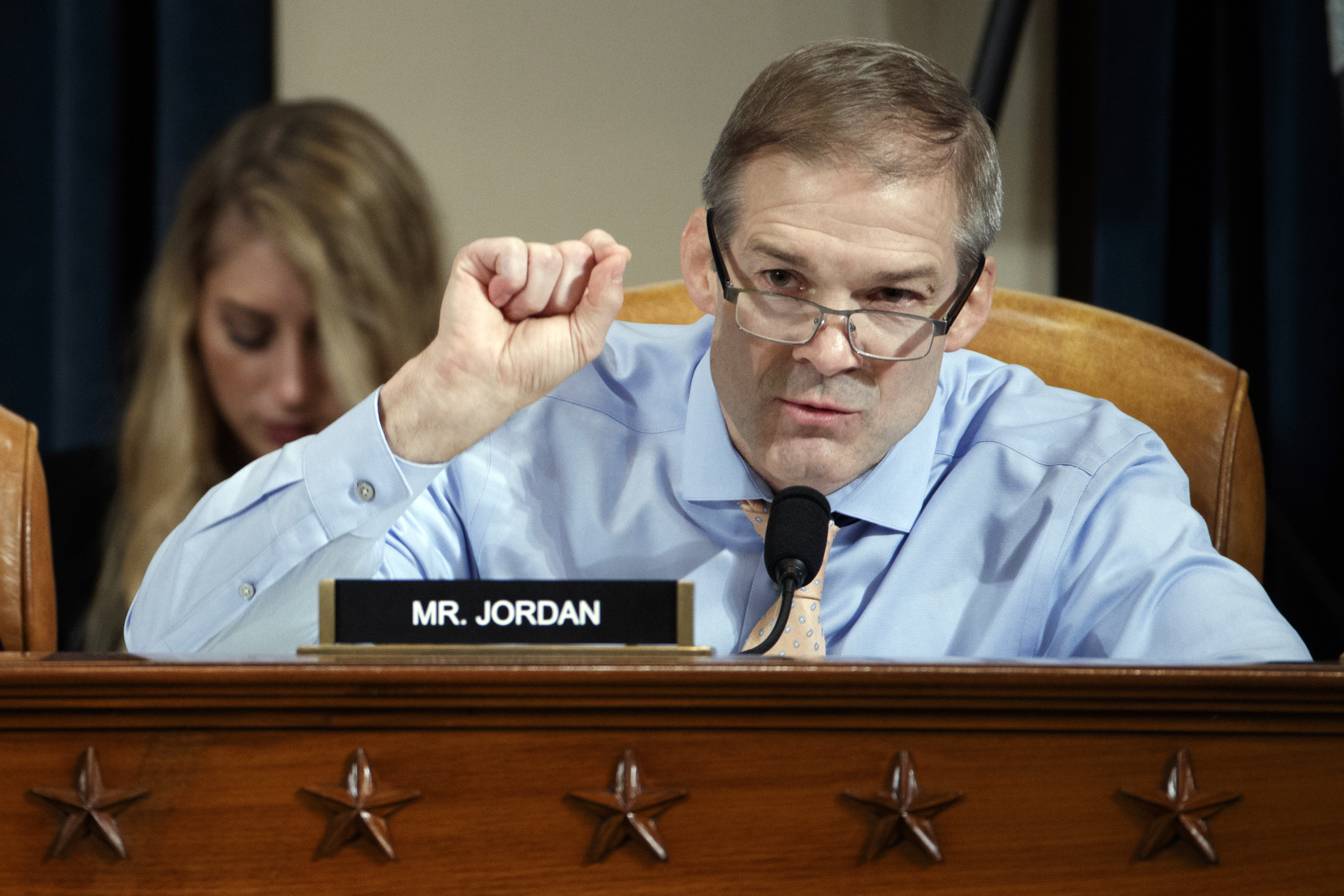
Jordan remained standing beside his chair.
He adjusted his glasses, placed one hand on his notes, and looked directly toward Raskin.
For nearly ten seconds, he said nothing.
The longer the silence continued, the more attention shifted away from Raskin’s remark and toward Jordan’s response.
Then Jordan leaned toward his microphone.
“Congressman Raskin, I’ve been called plenty of names during my years in public service.”
His Ohio cadence remained low and steady.

“But I’ve never believed that raising my voice makes me more deserving of respect.”
Nobody interrupted.
“Respect isn’t something you demand because you’ve got an impressive title or spent years in Washington.”
Jordan paused.
“It’s something you earn through your actions, especially when you’re dealing with people who disagree with you.”
Applause began in the center of the auditorium.
Within seconds, several additional sections joined in.
Raskin remained seated, waiting for Jordan to finish.
But Jordan had another question.
“If we can’t treat each other respectfully while discussing accountability, how can we expect the American people to trust us with theirs?”
The applause grew louder.
Jordan waited until the room quieted.
Then he reached toward a folder containing the forum’s accountability materials.
The discussion was about to move beyond personal insults.
And the documents inside that folder would force both lawmakers to confront a much more consequential disagreement.
The Argument That Started the Confrontation
The forum had opened with a question about whether Congress was doing enough to hold federal agencies accountable for public spending.
Jordan argued that lawmakers had become too willing to accept government explanations without demanding measurable evidence of performance.
He maintained that citizens deserved direct answers about how public funds were used and whether promised results had been achieved.
Raskin challenged that approach.
He argued that legitimate oversight required constitutional safeguards, reliable evidence, and respect for the legal rights of people under investigation.
The two representatives disagreed over how congressional investigations should proceed.
Jordan emphasized aggressive questioning and the need to challenge powerful institutions.
Raskin emphasized procedural fairness and the danger of treating unproven accusations as established wrongdoing.
Their disagreement intensified when Jordan questioned whether government officials sometimes used procedural objections to avoid answering difficult questions.
Raskin responded that constitutional protections were not optional conveniences.
He argued that public officials could demand accountability without abandoning established legal standards.
Jordan acknowledged that constitutional limits mattered.
But he maintained that oversight became ineffective when agencies refused to provide information necessary for evaluating their performance.
The moderator asked whether either participant could identify a practical standard that both parties should follow.
Jordan proposed requiring agencies to substantiate significant performance claims with documentation.
Raskin supported that principle but insisted that investigators accurately distinguish evidence from allegations.
The discussion initially appeared productive.
Then Jordan suggested that some congressional critics spent more time challenging investigative methods than examining documented administrative failures.
Raskin objected strongly.
He argued that Jordan was overlooking the importance of protecting individuals from accusations unsupported by reliable evidence.
The argument became increasingly heated.
Jordan attempted to respond.
Raskin interrupted.
Then came the sentence that stopped the discussion.
“Sit down, boy.”
The remark had nothing to do with federal spending or constitutional oversight.
And Jordan’s response would make that distinction central to everything that followed.
Jordan Opens the Folder and Presents the First Question
After addressing Raskin’s remark, Jordan opened a folder labeled “Public Accountability Review.”
Inside was a case study prepared for the forum involving a federal workforce development initiative.
The program had been allocated $420 million to provide training and employment assistance to workers affected by industrial restructuring.
Its stated objectives included improving employment prospects, supporting retraining, and helping participating communities recover from economic disruption.
Jordan placed the program’s initial performance summary on the desk.
“Congressman, let’s examine something we can actually measure.”
Raskin leaned forward.
Jordan identified three figures from the case study.
The program had projected 70,000 participants, 45,000 training completions, and 32,000 employment placements.
Its preliminary reporting showed 58,000 participants, 37,000 completed training programs, and 24,000 documented placements.
Jordan asked whether the reported results met the original projections.
Raskin replied that the figures suggested shortfalls but required context.
He pointed out that projections could represent future targets rather than final obligations.
Jordan agreed.
Then he asked whether government agencies should explain those distinctions when presenting results to taxpayers.
“Absolutely,” Raskin answered.
Jordan turned another page.
The program’s public summary described the initiative as achieving substantial success without clearly identifying the remaining gap between projections and recorded results.
Jordan questioned whether that description accurately represented the program’s performance.
Raskin examined the language.
He acknowledged that the summary could have communicated the limitations more clearly.
But he challenged Jordan to establish whether the reporting period had ended.
Jordan confirmed that the program remained active when the summary was prepared.
Raskin immediately emphasized the distinction.
An incomplete reporting period could not establish that the program would ultimately miss every target.
Jordan accepted that limitation.
But he questioned whether incomplete results justified publishing an unqualified statement of success.
The audience became noticeably more attentive.
The exchange had moved from a personal confrontation toward a specific disagreement about government transparency.
Then Jordan introduced another document.
This one revealed that the reporting problem had been identified before the public summary appeared.
The Missing Warning Changes the Discussion
Jordan removed an internal review memorandum from the folder.
The memorandum described concerns raised by the program’s independent evaluation team.
Reviewers had requested additional information about employment placements and the methods used to verify those outcomes.
They had also questioned whether some reported jobs met the program’s standards for sustained employment.
The concerns were documented before the public performance summary was released.
Jordan placed the memorandum beside the summary.
“Congressman, here’s my question.”
He pointed toward the reviewer’s request.
“If officials knew these numbers required verification, why wasn’t that uncertainty disclosed?”
Raskin studied the documents.
He acknowledged that unresolved verification questions should be identified when they could materially affect a public report.
But he asked whether the memorandum established deliberate concealment.
Jordan answered that it did not.
“I’m not alleging a crime,” he said.
“I’m asking why taxpayers received a conclusion before the people checking the numbers had finished their work.”
The moderator asked whether the case study contained additional correspondence.
Jordan produced a second memorandum.
It showed that administrators had responded to several questions but left other verification requests unresolved.
Some employment outcomes had been confirmed.
Others required additional supporting documentation.
Raskin argued that the distinction needed to be included in any final assessment.
Jordan agreed.
Then he pointed toward the public summary again.
“But that’s exactly what the original document failed to explain.”
The audience applauded.
Raskin challenged Jordan’s interpretation one more time.
He asked whether the unresolved questions affected the entire program or only a subset of reported placements.
Jordan examined the review.
The disputed outcomes represented a limited portion of the total.
Raskin emphasized that the distinction mattered.
Jordan accepted the correction.
But he maintained that material reporting limitations should remain visible regardless of their political consequences.
The moderator asked both lawmakers to formulate a precise finding.
Raskin proposed that the public summary inadequately disclosed outstanding verification questions.
Jordan added that those omissions weakened the reliability of its performance claims.
Both agreed.
The confrontation had produced its first substantive result.
The documents supported a reporting deficiency without proving fraud or intentional misconduct.
But Jordan had another question that would bring the discussion back to personal responsibility.
Raskin Turns the Accountability Standard Back on Jordan
Raskin leaned toward his microphone.
He argued that Jordan’s concerns demonstrated why congressional oversight needed careful evidentiary standards.
Without those safeguards, an investigator could turn incomplete reporting into unsupported accusations of criminal wrongdoing.
Jordan acknowledged the risk.
But he argued that procedural caution should not become an excuse for avoiding difficult questions.
Raskin challenged him directly.
“Would you apply the same standard to a report issued by a Republican administration?”
Jordan answered immediately.
“Yes.”
Raskin followed with another question.
“Even if the findings contradicted claims made by officials you supported?”
Jordan nodded.
“If the numbers don’t support the claim, they don’t support the claim.”
The moderator asked whether both lawmakers would endorse that principle publicly.
Both agreed.
But Raskin pressed further.
He argued that transparency also required congressional investigators to acknowledge when evidence undermined their initial interpretations.
Jordan accepted the principle.
Then he returned to the earlier personal exchange.
“Congressman, that’s why I don’t need to insult you to disagree with you.”
Raskin listened.
Jordan continued.
“If your evidence is stronger, show me.”
He pointed toward the documents.
“If mine is stronger, answer it.”
The audience responded with applause.
Raskin acknowledged that a substantive disagreement should be resolved through evidence rather than personal characterizations.
But he maintained that aggressive questioning did not automatically produce reliable conclusions.
Jordan agreed that investigative methods mattered.
The moderator summarized the developing agreement.
Government agencies should accurately disclose performance limitations.
Congressional investigators should avoid overstating what incomplete evidence establishes.
And both obligations should apply regardless of party affiliation.
The participants had reached a meaningful point of common ground.
Yet a final document would reveal that their discussion had not fully resolved the accountability problem.
The Final Document Reveals a Larger Failure
Jordan opened the last section of his folder.
Inside was a corrective-action proposal prepared by the case study’s independent reviewers.
The document recommended that the agency revise its public summary and publish a clear explanation of unresolved verification issues.
It also proposed a deadline for completing the outstanding review.
The recommendation identified a specific administrative responsibility.
Officials overseeing the program needed to distinguish verified results from outcomes awaiting confirmation.
Jordan asked whether the proposal should have been implemented before the program’s success was publicly announced.
Raskin examined the dates.
He acknowledged that the corrective action would have improved transparency.
But he questioned whether the agency had been legally required to implement it at that stage.
The moderator reviewed the case study’s reporting instructions.
They required disclosure of material uncertainties affecting performance conclusions.
Jordan pointed toward the relevant provision.
“Then this wasn’t just a disagreement about how to write a report.”
Raskin acknowledged that the instructions established a reporting standard.
But he maintained that determining legal responsibility would require additional information about who prepared and approved the summary.
Jordan accepted that distinction.
Then he asked the question that brought the auditorium back to silence.
“If government officials know the results haven’t been verified, who gave them the right to tell taxpayers the promises were fulfilled?”
Raskin paused.
The moderator repeated the question.
Raskin answered that officials should not present incomplete findings as definitively verified.
He added that a responsible correction should explain which results were established and which remained uncertain.
Jordan nodded.
“Then that’s the correction the public deserves.”
The moderator asked whether both participants supported adopting the independent review’s recommendation.
Raskin agreed.
Jordan agreed as well.
The resulting decision required the case study’s public summary to be revised.
It also called for an explanation of the remaining verification questions and a deadline for completing the review.
That outcome changed the forum’s central discussion.
The participants had moved beyond disagreement over political motives.
They had identified a reporting failure and a concrete response grounded in the documents.
And neither had needed to establish personal wrongdoing by an opposing politician to reach that result.
Jordan’s Closing Words Bring the Audience to Its Feet
As the forum approached its conclusion, the moderator invited both representatives to deliver brief closing statements.
Raskin spoke first.
He emphasized that constitutional accountability required accurate evidence, fair procedures, and respect for the rights of individuals under investigation.
He also acknowledged that public agencies should not claim verified success when material performance questions remained unresolved.
Jordan listened without interrupting.
When his turn came, he closed the folder.
Then he addressed Raskin directly.
“Congressman, we disagree about plenty of things.”
He paused.
“We disagree about investigations, government spending, and how Washington should approach accountability.”
Raskin remained attentive.
Jordan continued.
“But the people watching us deserve something better than politicians trying to win an argument by making the other person look small.”
The audience applauded.
Jordan waited.
“I spent years competing as a wrestler before serving in Congress.”
He looked across the table.
“And I learned something during those years.”
The room quieted.
“You don’t become stronger by pretending the other person doesn’t deserve to compete.”
He placed one hand on the folder.
“You become stronger by proving you’re prepared to answer the challenge.”
The applause grew louder.
Jordan then returned to the issue that had started the confrontation.
“Congressman Raskin, you told me to sit down.”
He paused.
“But the Constitution doesn’t give either of us the right to silence the other.”
Jordan looked toward the audience.
“And the American people didn’t send us to Washington so we could decide which questions we’re willing to hear.”
Raskin remained silent as Jordan finished.
“Respect isn’t something you demand with a title.”
His voice remained steady.
“It’s something you build through your actions, especially toward people who disagree with you.”
The audience responded with another round of applause.
Then Jordan delivered his final observation.
“If we cannot answer each other’s questions honestly, how can we expect Americans to trust our answers?”
For several seconds, the auditorium remained focused on the two lawmakers.
Raskin leaned toward his microphone.
He acknowledged that his earlier remark had been inappropriate.
“I disagree strongly with your approach to oversight,” Raskin said.
“But I can make that argument without dismissing you personally.”
Jordan nodded.
“I appreciate that.”
The moderator thanked both representatives.
He then confirmed that the forum’s final recommendation would include the agreed reporting correction.
The independent review’s outstanding questions would remain part of the record.
And the proposed deadline would ensure that unresolved findings were not simply forgotten.
The confrontation had produced more than a memorable response to an insulting remark.
It had established a specific accountability standard and a corrective action tied to the evidence examined.
Raskin had defended procedural fairness.
Jordan had pressed for transparency and measurable government performance.
Neither surrendered his broader political convictions.
But both accepted that legitimate oversight required reliable records and honest answers.
As the representatives stood, the moderator invited them toward the center of the stage.
They shook hands.
The gesture did not erase their political differences.
Nor did it establish that either lawmaker possessed the stronger argument on every question.
It demonstrated that a personal confrontation could end with a substantive decision rather than another unanswered accusation.
Jordan gathered his notes and stepped away from the microphone.
Raskin returned the case study documents to the moderator.
The audience began applauding once more.
The confrontation had started with a demand for Jordan to sit down.
It ended with both lawmakers standing before an audience that had watched them confront an uncomfortable question about government responsibility.
The decisive moment was not simply Jordan’s refusal to respond with another insult.
It was the point when the documents required both politicians to apply the same accountability standard to their own arguments.
The report’s limitations had been exposed.
A correction had been proposed.
And the participants had agreed that political authority did not excuse anyone from answering legitimate questions.
The final lesson was simple: Respect cannot replace accountability, but accountability loses its credibility when respect disappears.


