Team USA keeps winning, but a growing argument over Caitlin Clark and Chelsea Gray is becoming impossible to separate from the Americans’ pursuit of another international championship.
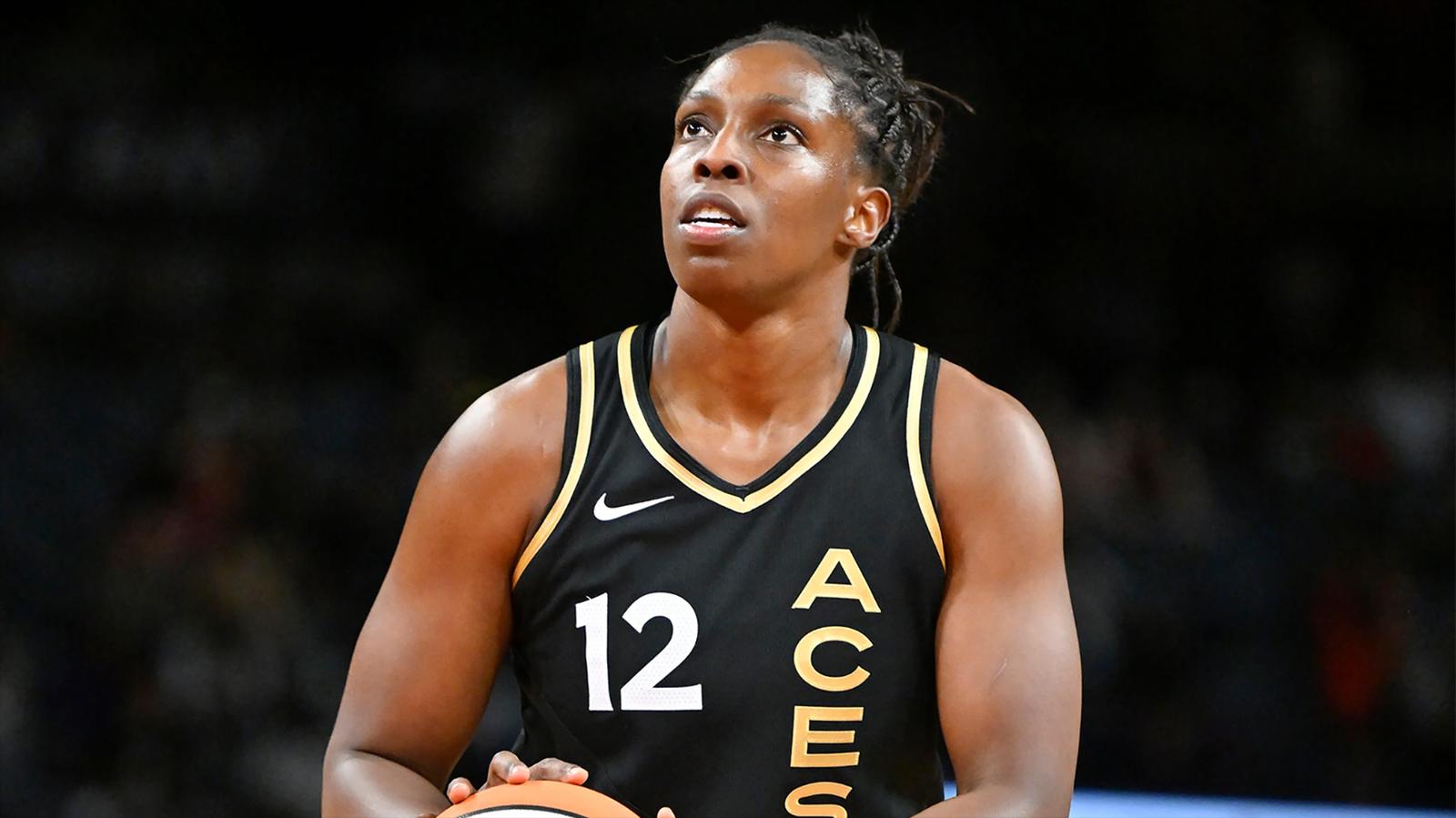
The controversy is not simply about which guard deserves to start.
It is increasingly about what kind of basketball Team USA wants to play.
When Clark enters, the offense often accelerates.
The ball moves earlier.
Transition opportunities appear.
Defenders are forced to extend far beyond the normal three-point line.
Passing lanes become larger because Clark’s range demands attention before she approaches the conventional scoring areas.
That effect is central to the argument made throughout the source.
Clark’s supporters are not merely saying she should shoot more.
They believe her presence changes how every other player can operate.
A defender picking Clark up near half court cannot simultaneously provide conventional help around the paint.
That creates additional room for American forwards and cutters.
A second defender helping toward Clark creates another opening.
Clark’s passing vision allows her to identify those openings quickly.
That is why the phrase “geometry of the floor” has become so important in the debate.
It describes impact that cannot always be measured through points alone.
The tournament opener against China provided the strongest evidence for that argument.
Clark came off the bench and finished with 14 points, 11 assists, three rebounds, and no turnovers, according to the source.
She also produced a team-best plus-30 rating.
The Americans controlled the game.
Four players reached double figures.
Clark appeared comfortable organizing teammates without needing to dominate the shooting volume.
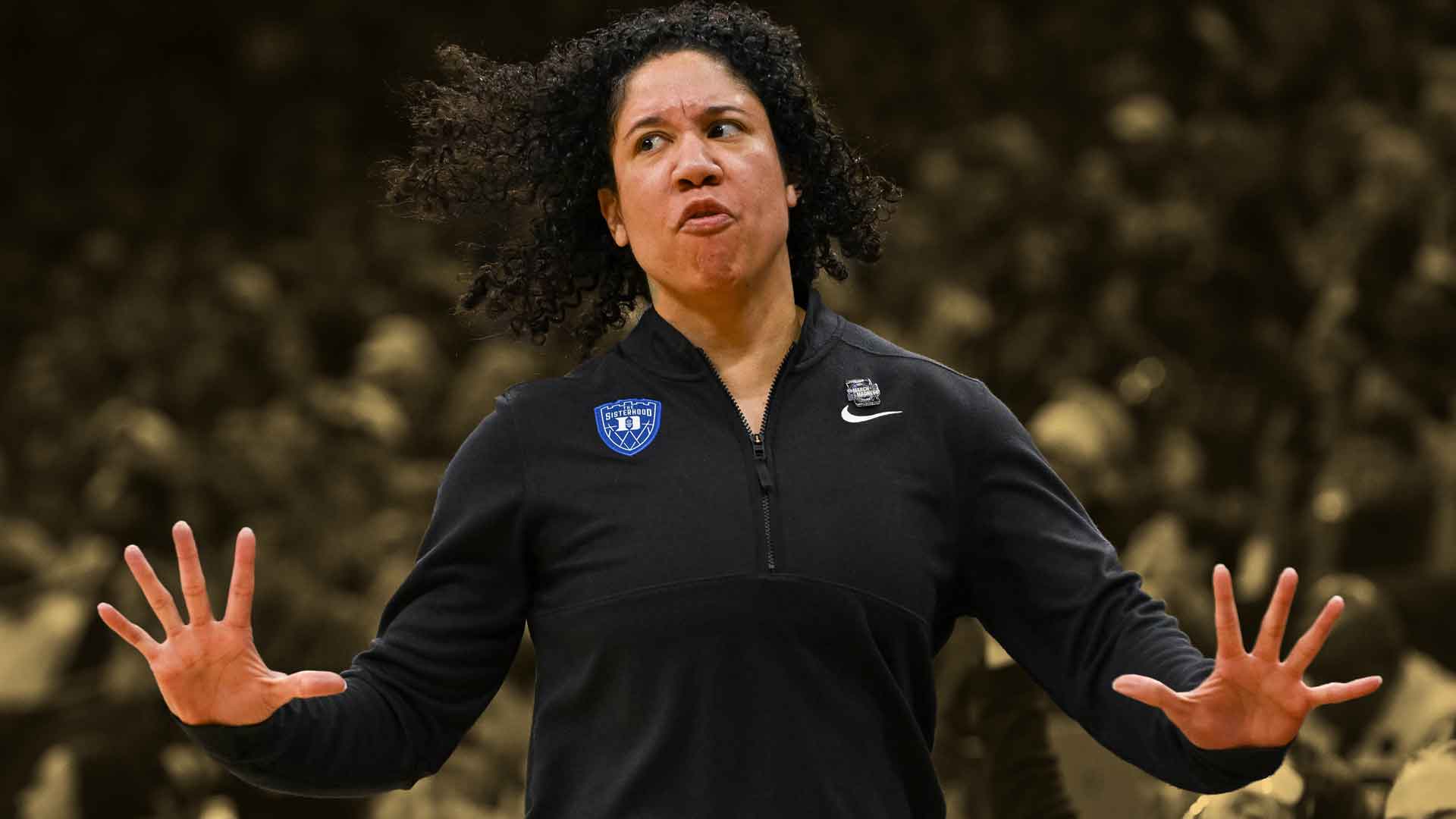
Afterward, Cara Lawson reportedly praised Clark for changing the tempo.
That comment immediately created a question.
If Clark changes the tempo in such a productive way, why not use that advantage from the opening possession?
The answer may involve Chelsea Gray.
Gray is one of the most accomplished guards of her generation.
She brings championship experience and two Olympic gold medals, as the source itself acknowledges near the conclusion.
Those credentials matter.
International tournaments create pressures that cannot be replicated easily.
Veteran guards understand possession management.
They understand difficult defensive coverages.
They have experienced close games with championship consequences.
Lawson may value that stability.
The controversy intensified because Team USA looked dramatically different against Italy.
Clark remained a reserve.
Gray again started.
The Americans escaped with a 55–52 victory after one of their ugliest offensive performances of the tournament.
The source portrays Gray as slowing the offense and repeatedly using too much of the shot clock.
It shows possessions where extended dribbling produced little advantage.
That criticism is strongly opinionated.
Still, the broader offensive problem was obvious from the description.
Team USA struggled to create clean opportunities.
Possessions became slower.
Shot quality declined.
The game became exactly the type of half-court battle Italy wanted.
Clark did not solve the problem herself.
She also struggled individually.
That fact is important because the lineup debate should not become a fantasy where every difficult possession disappears simply by inserting Clark.
Players have bad games.
Clark can miss shots.
She can turn the ball over.
She can struggle against physical defenses.
No serious argument should pretend otherwise.
The stronger case for Clark involves team structure rather than individual perfection.
When she pushes the ball, teammates are encouraged to run.
When teammates run, defenders must make decisions before getting organized.
Those early decisions generate easier baskets.
Gray represents a different style.
She is more methodical.
She can control possessions.
She can use experience to manage slower games.
There are opponents against whom that style may be valuable.
The question is which style better fits this particular Team USA roster.
The Americans possess extraordinary athleticism.
They have elite finishers.
They have shooters.
They have mobile forwards.
A fast creator can potentially maximize all of those strengths.
That is why Clark’s supporters believe the national team should be built around pace.
The Italy game turned that basketball disagreement into a much louder controversy.
The source includes commentators accusing Lawson of sticking too rigidly with veterans.
Some even suggested veteran status was receiving more weight than current performance.
That remains interpretation.
There is no proof Lawson is choosing Gray for political reasons or because she wants to suppress Clark.
There are simpler explanations.
Experience matters.
Defensive matchups matter.
Locker-room hierarchy matters.
Second-unit construction matters.
Lawson may genuinely believe Clark is more devastating as a reserve.
That sixth-player concept deserves serious consideration.
Imagine an opponent surviving the opening minutes against Team USA’s veteran group.
Then Clark enters.
The tempo immediately changes.
The defense must move its pickup point several feet higher.
Transition becomes more dangerous.
The second unit suddenly faces an entirely different offensive problem.
That can be a powerful tournament weapon.
Lawson may prefer the tactical contrast.
The issue is whether that benefit outweighs the cost of limiting Clark’s minutes beside Team USA’s best finishers.
That question became even more important against Czechia.
Lawson reportedly kept the same starting five for a third consecutive game.
Gray finished with two points and one assist in 16 minutes, according to the source.
Clark again came from the bench.
She played roughly 22 minutes and finished with nine points and seven assists.
Team USA won comfortably, 105–64.
The result supported Lawson in one obvious way.
Her team dominated.
A coach is difficult to condemn after a 41-point victory.
But the performance also strengthened Clark’s supporters.
They again saw the offense speed up during her minutes.
Clark herself emphasized pace afterward.
According to the transcript, she said Team USA played better offensively, improved in transition, and continued building chemistry.
That answer was notably professional.
She did not criticize Lawson.
She did not complain about starting.
She did not attack Gray.
She focused on collective improvement.
That matters because much of the hostility surrounding this debate is coming from outside the team.
Fans are turning it into Clark against Gray.
The players themselves have not established that framing publicly.
The better analysis is Clark’s style versus Gray’s style.
That difference can be studied.
When Gray initiates, how quickly does Team USA reach the first advantage?
How often does the offense attack before the defense is set?
What shot quality is created?
When Clark initiates, do those numbers improve?
Those are useful questions.
Starting status is less important than actual offensive responsibility.
Lawson could continue starting Gray while using Clark for more total minutes.
She could allow Clark to close games.
She could place Clark beside the strongest frontcourt combination.
She could start both guards.
There are multiple solutions.
That is why the argument should not become a demand for one symbolic change.
The deeper issue is how many meaningful possessions Clark is allowed to organize.
Her greatest value often comes from accelerating decisions.
She sees an opening and attacks it immediately.
That skill can disappear if she is asked to stand away from the ball.
Clark does not have to take every shot.
In fact, the China game demonstrated the opposite.
Eleven assists showed how devastating she can be when she distributes rather than dominates scoring.
That style may fit Team USA perfectly.
A roster full of stars does not need another player taking difficult shots simply to establish hierarchy.
It may need a player who generates easier shots for everyone.
Clark can potentially serve as that connector.
Breanna Stewart benefits from additional space.
Napheesa Collier benefits from defenders being pulled away from the paint.
Jackie Young benefits from attacking shifting defenses.
Other guards benefit from receiving the ball after Clark has already forced the first rotation.
That is the strategic case.
The criticism of Gray becomes weaker when it turns personal.
She has earned respect through years of elite basketball.
Calling her washed or treating her like an obstacle to Clark oversimplifies the situation.
The legitimate question is current fit.
A decorated veteran can still be less effective in one particular lineup than a younger player.
Sports eventually demand that coaches make those judgments.
Reputation matters until performance says otherwise.
The source argues that Gray has produced three straight quiet performances.
That creates pressure.
A veteran starter does not need to lead the team in scoring.
But she must provide something that justifies the role.
That could be defense.
It could be organization.
It could be leadership.
It could be late-game control.
Lawson needs to identify that value clearly.
Otherwise, every strong Clark performance will make the starting decision harder to explain.
The upcoming knockout stage increases the urgency.
Group games allow experimentation.
Elimination games do not.
One stagnant quarter can end a tournament.
One poor rotation can erase months of preparation.
That is why Team USA cannot rely solely on superior talent.
Against weaker opposition, stars can overcome structural problems.
Against elite opponents, those problems become decisive.
France, Australia, Spain, and other high-level teams are capable of punishing slow offense.
They can switch actions.
They can pressure guards.
They can pack the paint.
They can force the Americans to create advantages rather than simply wait for talent to win.
Clark’s style may become especially valuable in those situations.
Her range stretches switches.
Her passing punishes traps.
Her pace attacks teams before their defensive structure forms.
That does not mean Lawson must start her every game.
It means Clark must be central to the tactical plan.
The source repeatedly claims that Team USA becomes its best version when Clark is running the offense.
That conclusion still requires a larger sample.
Three games are not enough to settle every rotation question.
But the early evidence is compelling enough to demand attention.
China showed Clark’s ceiling.
Italy showed Team USA’s offensive vulnerability.
Czechia showed how quickly the Americans could recover when they returned to faster basketball.
Those games provide Lawson with useful film.
The next step should be experimentation rather than stubbornness.
Try Clark with the first unit.
Try Gray with different combinations.
Try both together.
Study which groups create the most efficient possessions.
Track transition frequency.
Track turnovers.
Track shot quality.
Track defensive performance too.
That final point matters because offense is only half the game.
If Clark’s groups score more efficiently but defend significantly worse, Lawson has another calculation to make.
International championships often turn on defense.
Gray may possess advantages there.
Those advantages should be measured rather than assumed.
That is how the debate can become serious basketball instead of fan warfare.
The source includes harsh accusations that Lawson is protecting veterans.
There is no evidence proving that motive.
It also uses language suggesting Clark is being deliberately suppressed.
Again, that goes beyond what the basketball evidence establishes.
The more defensible criticism is simpler.
Team USA may not yet be maximizing Clark.
That is enough to create a legitimate debate.
There is no need for conspiracy theories.
Lawson has described Clark as someone who changes tempo.
The game film apparently supports that description.
The remaining question is whether the coach will redesign the rotation around what she herself has observed.
Perhaps Lawson believes the best answer is maintaining Clark as an explosive reserve.
That could work.
If Team USA wins gold and Clark dominates second units, the strategy will look intelligent.
But there is another possibility.
Clark may keep producing so effectively that separating her from the strongest starting talent becomes inefficient.
Then Lawson will need to adjust.
Great coaches do not defend preseason plans because they are emotionally attached to them.
They update those plans when evidence changes.
That flexibility may determine Team USA’s ceiling.
Gray does not need to be disrespected for Clark to receive more responsibility.
Clark does not need to become the only star for the offense to center more heavily on her playmaking.
Both ideas can coexist.
That should be the mature version of the conversation.
The Americans have enough talent to build multiple winning lineups.
Their problem is choosing the one that becomes most difficult for opponents to defend.
Right now, Clark’s ability to stretch the court and accelerate possessions provides a powerful argument.
The next games will determine whether that argument becomes overwhelming.
If Gray rebounds and controls the offense effectively, Lawson’s faith will look justified.
If Clark continues producing more pace, assists, and easier opportunities, the pressure for change will intensify.
Eventually, basketball settles these debates.
Not reputation.
Not social media.
Not veteran status.
Not popularity.
Performance.
The most important question therefore is not whether Chelsea Gray deserves respect.
She clearly does.
It is not whether Caitlin Clark deserves attention.
She clearly has it.
The real question is which guard gives this particular Team USA roster the best chance to become its most dangerous version.
And as the knockout rounds approach, Cara Lawson may not have much longer to decide.


