Cara Lawson was given several opportunities to suggest that Team USA’s starting lineup might change before the World Cup quarterfinal.
Her answer remained essentially the same.

“I like where we are right now.”
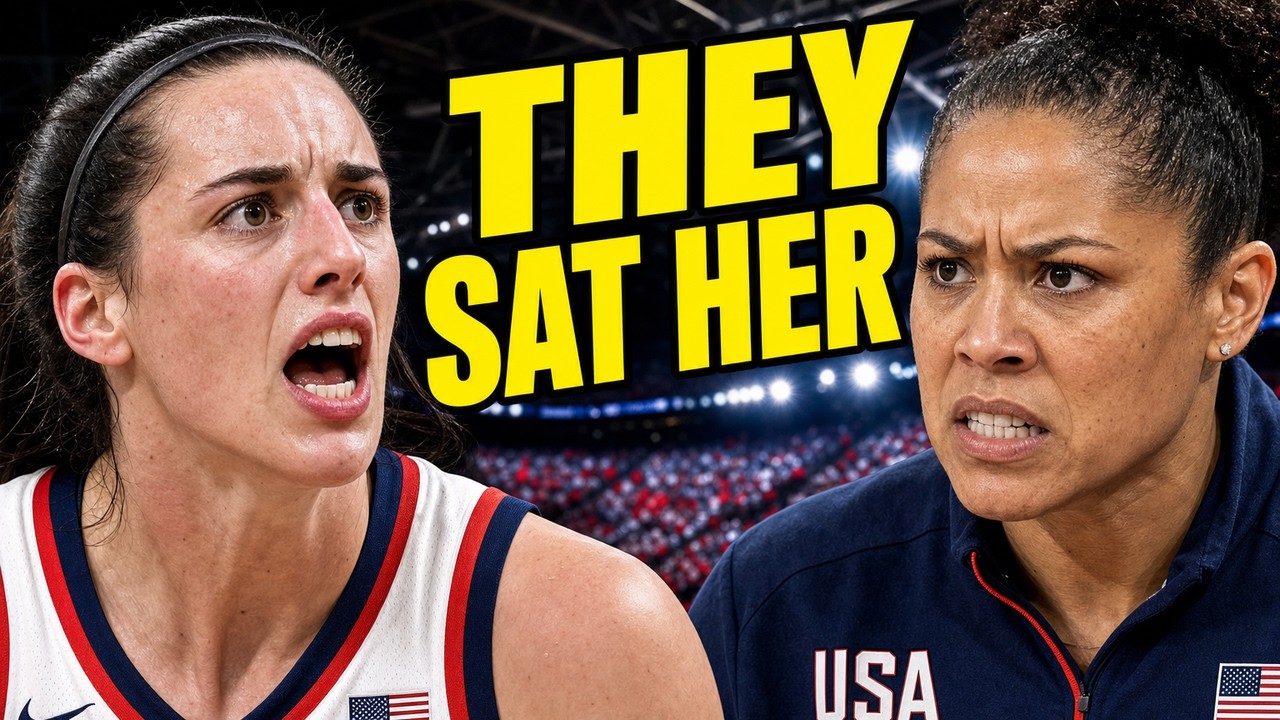
That statement immediately intensified an already heated debate surrounding Caitlin Clark, Paige Bueckers, Angel Reese, and the veteran-heavy starting group.
The controversy is not simply about popularity.
It is increasingly about whether Team USA’s official lineup reflects the combinations producing the strongest basketball.
Clark remains a reserve on paper.
Yet according to the supplied account, she led Team USA in assists, plus-minus, and total minutes through group play.
That creates an unusual contradiction.
A player can technically come off the bench while functioning as one of the most important players on the roster.
Clark appears to occupy exactly that space.
The same dynamic applies, to varying degrees, to Bueckers and Reese.
They are officially reserves.
But the source argues that their minutes, production, and lineup impact have made them central to Team USA’s tournament identity.
That is what makes Lawson’s answer so interesting.
She is not refusing to use the younger players.
She is refusing to change the opening hierarchy.
Those are different decisions.
Team USA entered the quarterfinal stage undefeated.
According to the transcript, the Americans beat China by 33 points, survived Italy by three, and defeated Czechia 105–64.
On the surface, that record gives Lawson a powerful defense.
Why change a lineup belonging to an undefeated team?
The problem is that Team USA is judged by a different standard.
For this program, winning is expected.
Dominance often is too.
A narrow escape therefore produces more scrutiny than it would for most national teams.
The Italy game remains the central reason this rotation discussion refuses to disappear.
Team USA survived 55–52.
According to the supplied account, that was the Americans’ lowest World Cup scoring output in decades.
Italy also had a late opportunity to force overtime.
That is not the type of performance expected from a roster filled with elite professional talent.
The starting group received much of the criticism.
Chelsea Gray’s statistics became one major talking point.
According to the source, Gray scored 11 total points across three group games.
She reportedly shot 30.7 percent from the field.
The transcript also says she recorded only three assists across those games.
Her scoring average was listed at 3.7 points per game.
Those numbers look poor for a starting point guard.
But they do not tell the entire story.
Gray reportedly made two critical plays late against Italy.
She drew an important offensive foul.
She then hit a jumper that extended Team USA’s lead during the final minutes.
Those possessions mattered.
Veterans often justify their roles through exactly those moments.
Experience becomes valuable when a game becomes uncomfortable.
That is the strongest argument for keeping Gray in the starting group.
The counterargument concerns the larger sample.
If Gray is starting because of organization, control, and playmaking, critics reasonably ask whether the production supports that role.
The answer becomes even more complicated when Clark’s minutes are considered.
According to the transcript, Clark played more minutes than anyone on Team USA during the group stage.
Against Czechia, she logged 22 minutes.
Reese reportedly played 19.
Bueckers played 18.
That makes the word “benching” somewhat misleading.
Clark is not being buried.
She is being used heavily.
The true dispute concerns sequencing.
Lawson trusts Clark enough to play major minutes.
She simply prefers someone else to begin the game.
That distinction may be tactical.
It may be psychological.
It may involve defensive matchups.
The transcript does not establish a definitive explanation.
What it does establish within the supplied narrative is an unusual gap between the starting graphic and the actual rotation.
The lineup card says one thing.
The minutes distribution says another.
That is why the debate has become more sophisticated.
Fans are no longer simply demanding that Clark play.
She already plays.
They are asking whether Team USA should establish its offense through Clark from the opening possession.
Her performance against China strengthened that argument.
According to the source, Clark finished with 14 points and 11 assists in the tournament opener.
She reportedly committed zero turnovers.
That assist performance immediately demonstrated her ability to create internationally.
The transcript says it was among the highest assist totals by an American at a women’s World Cup in decades.
Clark then struggled badly against Italy.
She scored one point.
She missed all six of her field-goal attempts.
That performance must remain part of any balanced evaluation.
Even elite shooters have terrible nights.
The more important question is whether a cold shooting performance should eliminate Clark’s playmaking value.
That is where critics disagree with Lawson’s Italy rotation.
Clark does not need to score 20 points to change an offense.
Her passing can create advantages.
Her range can alter spacing.
Her pace can force a defense to react earlier than it wants.
Those tools remain available even when shots are not falling.
Clark bounced back against Czechia.
The transcript credits her with nine points, seven assists, and a plus-22 impact in approximately 21 minutes.
That performance reinforced the argument that her value extends beyond scoring.
Across group play, the source lists Clark at approximately eight points and 6.3 assists per game.
More importantly, it says she led Team USA in assists and plus-minus.
Those figures make her reserve status increasingly unusual.
Reese also strengthened the case for younger players receiving larger roles.
According to the supplied account, she produced roughly 26 points and 18 rebounds across three appearances while averaging fewer than 20 minutes.
Bueckers was described as one of Team USA’s steadiest young scorers.
The source lists her at 10.3 points per game.
That reportedly tied her with Breanna Stewart for second on the team.
Those numbers help explain why fans increasingly view the reserve label as ceremonial.
The younger players are already performing substantial roles.
The question is whether Lawson should formalize that reality.
There is precedent for doing exactly that.
The transcript points toward the 2024 Paris Olympics.
According to the source, Diana Taurasi and Chelsea Gray struggled offensively during group play.
USA Basketball responded by changing the lineup.
Jackie Young moved into the starting group for the knockout rounds.
Young reportedly started three games and eventually finished among Team USA’s leading scorers.
That example matters because it demonstrates institutional flexibility.
USA Basketball has previously altered a veteran-heavy lineup during a major tournament.
The decision was not treated as disrespect.
It was treated as adjustment.
That history increases the pressure on Lawson.
If performance justified change in Paris, critics ask why the same standard should not apply now.
Kahleah Copper’s group-stage numbers make that question even sharper.
According to the supplied source, Copper averaged 5.3 points while shooting 21.4 percent.
Those were difficult numbers for a starter.
The transcript emphasizes that Copper had earned her role before the tournament.
She was not described as a sentimental selection.
She reportedly played extremely well during World Cup qualifying.
That context matters.
A coach should not abandon a player after a few poor games simply because another option is popular.
Short shooting slumps happen.
The danger is confusing earned trust with permanent immunity.
Performance must eventually affect rotations.
That standard should apply equally to Clark, Gray, Copper, and everyone else.
Jackie Young offers an example of why the debate cannot be reduced to “young versus old.”
The source praises Young heavily.
She reportedly averaged 11.3 points while shooting 53.8 percent.
She also produced crucial offense against Italy.
That is exactly what merit-based rotation decisions should reward.
Young’s production demonstrates that the correct question is not generational loyalty.
It is effectiveness.
Lawson’s strongest defense remains that the starting group has generally opened games well.
The source acknowledges that point.
Team USA controlled China.
It overwhelmed Czechia.
Only Italy produced a genuine crisis.
Veteran starters can absorb early physicality.
They understand international officiating.
They can settle nerves.
Those qualities are difficult to measure.
They still matter.
International basketball also differs from the WNBA.
The spacing can feel different.
Zone defenses become more prominent.
Physicality is interpreted differently.
Possessions develop at another rhythm.
Experience can provide stability in those environments.
That gives Lawson a legitimate reason to value Gray and other veterans.
But knockout basketball changes the risk calculation.
There is no long regular season available for experimentation.
One poor half can end a championship run.
That makes flexibility more important.
Hungary therefore becomes more than another opponent.
According to the source, Hungary defeated Japan 84–63 to reach its first World Cup quarterfinal in decades.
The transcript portrays Hungary as particularly dangerous in a slower half-court game.
That style is relevant because Italy challenged Team USA similarly.
Slow the game.
Reduce transition.
Force Team USA into contested half-court possessions.
Make the Americans prove they can consistently create quality shots.
That approach almost produced an upset once.
Lawson must ensure it does not happen again.
The quarterfinal also carries longer-term significance.
The transcript frames this tournament as part of Team USA’s evaluation process before the 2028 Los Angeles Olympics.
That makes every lineup experiment valuable.
Clark, Bueckers, and Reese represent major pieces of the program’s future.
Gray, Stewart, Copper, and other veterans represent established championship experience.
A successful national team must connect those generations.
It does not have to choose one side.
Clark can play with veterans.
Bueckers can play with veterans.
Reese can play beside experienced frontcourt players.
The smartest rotation may mix strengths rather than separate age groups.
That possibility makes the obsession with the starting lineup slightly misleading.
The five players who start do not necessarily need to become the five who finish.
Closing lineups matter more.
If Clark enters early and controls most meaningful possessions, her reserve designation becomes mostly symbolic.
If Gray starts but Clark closes tight games, Lawson has already created a functional hierarchy.
That may be what the minutes are signaling.
The real test will arrive when Team USA faces another close game.
Who receives the ball after a timeout?
Who controls the pace?
Who remains on the floor during the final four minutes?
Those decisions will reveal Lawson’s true level of trust.
Clark’s public behavior also matters.
According to the transcript, she has discussed Team USA’s chemistry positively.
She has not publicly demanded a starting role.
That gives Lawson room to manage the situation without an internal confrontation.
Clark’s approach also strengthens her case.
She can allow performance to argue for her.
If she continues leading the team in playmaking and impact statistics, pressure for a change will increase naturally.
If Gray and Copper rebound strongly, Lawson’s continuity will look justified.
That is why the decision should remain evidence-based.
Popularity cannot determine the lineup.
Neither can reputation.
Gray’s résumé should matter.
It should not end the discussion.
Clark’s enormous following should matter commercially.
It should not guarantee a starting job.
Copper’s previous success should matter.
It should not erase current performance.
Every player should face the same ultimate standard.
What gives Team USA the best chance to win?
That is the question beneath all the noise.
Lawson has answered the public version of the question.
She likes where Team USA is.
Now the basketball must defend that answer.
If the veteran starters control Hungary from the opening possession, the criticism will weaken.
If Team USA struggles and Clark immediately changes the game after entering, the debate will become even louder.
And if the Americans eventually lose after another stagnant opening, Lawson’s lineup decision could define the entire tournament.
That is the pressure attached to coaching this roster.
There are almost too many good options.
Every choice leaves another elite player waiting.
But that is exactly why adaptability matters.
USA Basketball has already demonstrated that it can change during a tournament.
Paris provided the precedent.
Berlin provides the new test.
The lineup card may continue showing Gray and Copper as starters.
The minutes may continue telling a different story.
Eventually, those two documents may have to agree.
Because when knockout basketball reaches its decisive possessions, titles and labels disappear.
Only the five players on the floor matter.
And if Caitlin Clark continues leading Team USA in minutes, assists, and overall impact while officially remaining a reserve, the question will become harder with every victory.
Is she really a bench player?
Or has Cara Lawson already made Clark one of Team USA’s central pieces without being willing to write her name into the starting five?


