Team USA defeated Czechia 105–64, but the result did little to quiet the increasingly heated debate surrounding Caitlin Clark and head coach Cara Lawson.
Instead, the blowout created another round of questions about why Clark remains outside the starting lineup despite repeatedly changing the pace of games when she enters.
The supplied account pushes the controversy even further.
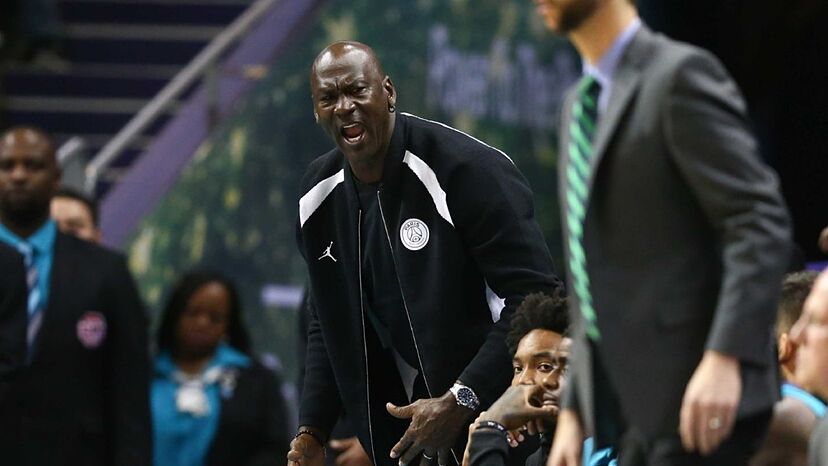
It says reports began circulating that Michael Jordan had privately criticized the way Team USA was using Clark.
That alleged reaction has not been independently established here.
Still, the rumor gained traction because it connected Clark’s current situation with a familiar basketball argument about greatness, hierarchy, and whether coaches should unleash exceptional talent or manage it carefully.
The basketball evidence provides a more reliable place to begin.
According to the source, Team USA’s bench unit produced approximately plus-1.18 points per minute against Czechia.
The starters reportedly produced approximately plus-0.81 per minute.
That difference does not prove Lawson chose the wrong starting five.
Single-game plus-minus numbers can be heavily influenced by matchups, timing, opponent substitutions, and score effects.
But the contrast is significant enough to examine.
The source describes Clark playing beside Paige Bueckers and Angel Reese during stretches when Team USA dramatically accelerated.
Passes moved earlier.
Transition opportunities appeared before Czechia could organize.
Spacing improved.
The Americans began creating the type of easy opportunities expected from a roster loaded with elite talent.
Clark’s effect on pace is particularly important.
Her game does not simply involve making long three-pointers.
Her range forces defenders to begin guarding far from the basket.

That changes where help defense can stand.
When a defender moves several feet higher, another section of the floor becomes available.
A cutter gains space.
A roller sees a clearer lane.
Another guard attacks a wider gap.
Those effects can happen without Clark receiving statistical credit.
This is why describing her influence through the “geometry” of the floor has become so common in the debate.
The offense becomes physically larger when Clark is involved.
The source argues that Czechia struggled once Clark began pushing the ball aggressively.
Defenders were forced to pick her up almost immediately after she crossed half court.
That pressure created opportunities behind the first line of defense.
The strategic argument is straightforward.
If Clark creates that much instability, Team USA should use it as often as possible.
The controversy begins when Lawson removes her shortly after the offense finds rhythm.
According to the source, those substitutions repeatedly interrupted momentum.
That pattern has led some supporters to believe the coaching staff is deliberately preventing Clark from taking over games.
There is no verified evidence establishing that motive.
Coaches rotate players for many reasons.
Minutes can be planned before games.
Defensive matchups can change priorities.
Tournament preparation can require experimentation.
The strongest criticism therefore does not need a conspiracy.
It simply asks whether Lawson is responding quickly enough to what works.
The previous Italy game made that question harder to avoid.
Team USA escaped 55–52 after struggling badly on offense.
The source describes that performance as slow, disconnected, and lacking creativity.
Clark also struggled individually.
Her outside shot did not fall.
That matters because her supporters cannot argue she played perfectly.
She did not.
But the larger offense also appeared uncomfortable.
Team USA became trapped in difficult half-court possessions.
The ball stopped moving.
Italy gained confidence.
A heavily favored American team suddenly found itself fighting for survival.
That game provided Lawson with useful information.
When Team USA plays slowly, its talent advantage can become easier to defend.
When the Americans accelerate, that talent becomes much harder to contain.
Clark naturally pushes toward the faster version.
That does not automatically make her the best option in every situation.
There will be games where Team USA needs control.
There will be moments when defensive stability becomes more important than pace.
There will be matchups where veteran experience matters.
The question is balance.
The source portrays Lawson as favoring a veteran-oriented structure even when younger combinations appear to create superior offensive flow.
That is where the alleged Michael Jordan reaction enters the story.
According to the transcript, rumors circulated that Jordan watched the Czechia game and privately questioned why Clark was being restricted.
The account describes his supposed criticism as particularly intense.
Again, no direct statement from Jordan is supplied.
No recording is presented.
No named representative confirms the comments.
The alleged reaction must therefore remain exactly that.
A rumor.
What makes the rumor compelling is the historical comparison behind it.
Jordan entered the NBA as a transformative young player competing inside a league controlled by established veterans.
He eventually became the central figure of basketball’s global expansion.
The source invokes the famous idea of veteran resistance to rising superstars.
It suggests Jordan would recognize the danger of forcing an unusual talent into a traditional hierarchy.
That interpretation makes for powerful storytelling.
It should not be confused with evidence that Jordan actually intervened.
The underlying basketball principle is still worth discussing.
Elite coaches do not treat every player identically.
Fairness does not always mean equal usage.
Some players possess skills that fundamentally alter how opponents must defend.
Those players often require different tactical treatment.
Clark may belong in that category.
The source describes her range as extending well beyond the international three-point line.
That threat forces defenders away from the paint.
It can create driving lanes even before Clark touches the ball.
That is valuable in international basketball.
FIBA-style defenses often protect the lane aggressively.
Teams can load the interior and force opponents toward contested perimeter shots.
Clark makes that strategy more difficult.
Guard her normally, and she may shoot from deep.
Extend toward her, and the interior opens.
Trap her, and she can pass into an advantage.
Those are difficult choices for any defense.
The question is whether Lawson’s system maximizes them.
The source argues that the starting group sometimes plays directly into the defense’s preferred structure.
Possessions become slower.
Isolation increases.
Mid-range attempts appear.
The opponent has time to recover.
Clark’s faster style creates the opposite problem.
The defense must make decisions before it is fully organized.
That difference may matter more than age or reputation.
Breanna Stewart provides an important example.
A veteran can thrive in the faster system.
That proves the debate does not need to become young players versus established players.
It should be about complementary styles.
Stewart can sprint the floor.
She can finish early opportunities.
She can punish defenders who rotate toward Clark.
That combination makes sense.
The same principle can apply to other veterans.
Clark does not need to replace established stars.
She may simply make them more dangerous.
That is why the public debate becomes less useful when it turns into accusations about jealousy.
The source describes fans identifying missed passes, ignored cuts, and moments where Clark appeared open without receiving the ball.
Those possessions deserve analysis.
Intent cannot be inferred so easily.
A missed read is not proof of hostility.
A bad pass is not proof of sabotage.
Poor spacing is not proof of a vendetta.
What matters is whether those mistakes repeat.
If Clark consistently creates advantages that Team USA fails to use, the coaching staff should address the pattern.
That is where Lawson earns responsibility.
Coaches cannot force every pass.
They can design structures that make the correct pass more obvious.
They can create actions where Clark receives the ball twice during one possession.
They can use her as a screener.
They can run handoffs.
They can pair her with another fast decision-maker.
Those solutions turn controversy into basketball.
The source also criticizes Lawson’s postgame language.
It says she described Clark as a young player still finding her way during her first senior World Cup.
Supporters viewed that phrasing as dismissive.
Their objection is understandable.
A player who repeatedly drives productive stretches may not look like someone simply trying to survive the moment.
But Lawson’s description could also have a more ordinary meaning.
Clark is new to this particular roster.
She is learning teammates.
She is learning international spacing.
She is learning Lawson’s terminology.
She is adjusting to a team where almost everyone is accustomed to significant offensive responsibility.
That adjustment exists even when Clark performs well.
The mistake would be using “still learning” as a permanent reason to deny opportunities her performance has earned.
Development and responsibility can happen simultaneously.
Clark can still be learning while also becoming central to the offense.
The source interprets the disagreement as part of a larger cultural conflict within women’s basketball.
It portrays traditional hierarchy on one side and a faster, more commercially powerful generation on the other.
That framing is dramatic.
There is some truth to the generational tension.
Sports constantly change.
Older systems are challenged.
New styles emerge.
Younger stars replace established leaders.
But institutional change rarely happens as neatly as one generation defeating another.
Veterans still matter.
Experience still matters.
Defense still matters.
The best teams combine old strengths with new ones.
Team USA has enough talent to do exactly that.
Lawson does not need to abandon veterans to embrace Clark.
She needs to determine which combinations give the Americans the largest strategic advantage.
That task becomes more urgent as the tournament moves toward elimination basketball.
Group-stage games provide room for experimentation.
Knockout games do not.
One bad quarter can end a championship run.
One stubborn rotation can become the only decision anyone remembers.
That creates enormous pressure.
Team USA is expected to win gold.
Anything less will trigger scrutiny.
If Clark remains a reserve and the Americans win comfortably, the debate may fade.
If they lose a close game while she watches from the bench, the backlash will become overwhelming.
That is why Lawson’s decisions now carry unusual weight.
She is not merely choosing five starters.
She is defining the identity of the national team.
Will Team USA prioritize methodical control?
Will it prioritize transition speed?
Will Clark become the central organizer?
Will she remain an explosive reserve?
Those are basketball choices.
The source argues that the answer should already be obvious.
Its conclusion is that Clark’s presence gives Team USA a level of offensive danger the traditional lineup cannot reproduce.
That claim may be overstated.
But the evidence described is strong enough to demand continued testing.
Clark’s minutes should be evaluated by what happens during them.
Does the pace improve?
Does shot quality improve?
Do turnovers increase or decrease?
Does the defense hold up?
Do teammates get better opportunities?
Those questions produce useful answers.
The alleged Jordan intervention does not.
Even if Jordan privately criticized Lawson, his opinion would not automatically make the rotation wrong.
Basketball authority is not transferred through celebrity.
Jordan’s résumé would make his view interesting.
The coaching staff still needs to make decisions based on this roster, this tournament, and these opponents.
That is the standard Lawson should follow.
The cultural importance of Clark complicates everything.
Her presence attracts enormous attention.
Fans travel to see her.
Clips involving her spread rapidly.
Her supporters analyze every substitution.
That visibility increases the pressure to play her.
Popularity alone should never determine competitive minutes.
But popularity also should not become a reason to resist change.
If the most famous player is also driving the best offense, there is no contradiction between entertainment and winning.
There is alignment.
That may ultimately become the most important point.
Team USA does not need to choose between maximizing Clark and maximizing the team.
Those goals may be the same.
A defense stretched by Clark gives Stewart more room.
A trap on Clark creates an opening for Bueckers.
A help defender pulled outward creates space for Reese.
A transition pass can turn defense into immediate offense.
Clark’s strengths can multiply everyone else’s.
That is what great team construction should accomplish.
The biggest challenge now is determining whether Lawson sees the same pattern.
The Czechia result was comfortable.
That gives Team USA time.
The next opponent may not.
A stronger defense will punish hesitation.
A better shooting team will punish slow starts.
An experienced opponent will recognize uncertain rotations immediately.
That is when the debate will stop being theoretical.
If Clark’s group continues creating the most dangerous basketball, Lawson will face a simple choice.
Follow the evidence.
Or defend the hierarchy.
The source believes she has already chosen the second option.
The available basketball evidence does not justify such certainty yet.
But it does justify asking the question.
And that may explain why the Michael Jordan rumor spread so quickly.
It gave voice to a frustration already growing among fans.
Why manage a weapon when you can unleash it?
Why force an unusual player into an ordinary template?
Why prioritize tradition if the game itself is demanding change?
Those questions will follow Team USA deeper into the tournament.
Clark does not need Jordan to answer them.
Her performance can do that.
If she continues creating pace, space, and efficient offense, the pressure on Lawson will become impossible to ignore.
If the veteran structure proves superior in the biggest games, the coach will be vindicated.
Either way, the court will eventually settle the argument.
Until then, every Clark substitution will be examined.
Every Lawson comment will be dissected.
Every dominant young-unit run will restart the debate.
And every rumor involving basketball royalty will add another layer of pressure.
Team USA still controls its destiny.
The roster remains overwhelmingly talented.
The gold medal remains within reach.
But one question now hangs over everything.
Is Cara Lawson carefully managing Caitlin Clark for a championship run, or is Team USA limiting the very player capable of transforming how the entire world sees American basketball?


